
Wi-Fi technology keeps evolving as demand for faster, more reliable wireless connectivity increases in homes, offices, on smartphones and laptops, on smart devices and in industrial systems. What is WiFi 8? Speed, Features, Release Date and Wi-Fi 7 Comparison is a crucial topic to anyone interested in the next generation of wireless networking. Wi-Fi 8 is the projected consumer name for technologies based on IEEE 802.11bn, a future wireless standard focused on Ultra High Reliability (UHR), lower latency, improved coverage and more consistent performance.
The previous versions were all about raw throughput, whereas Wi-Fi 8 is more about making wireless connections more reliable in crowded, tough conditions. IEEE has 802.11bn as an ongoing project and expects to complete it in 2027-2028.
What Is Wi-Fi 8?
So what is Wi-Fi 8? The next generation of wireless networking technology is Wi-Fi 8, which is planned to be based on IEEE 802.11bn. Wi-Fi 8 meaning is strongly related with Ultra High Reliability, or UHR. The definition of Wi-Fi 8 goes beyond simply increased peak speeds, therefore. It seeks to achieve more reliable throughput, reduced latency and fewer packet losses when networks are congested, signals are weak, or users are roaming between access points.
The IEEE Task Group 802.11bn is developing the Wi-Fi 8 standard. IEEE characterises the project as an amendment to add Ultra High Reliability features to WLANs. Its aims are improvements in throughput, latency and packet loss versus the previous Extremely High Throughput generation.
Wi-Fi 8 Features
The big Wi-Fi 8 features are reliability and real-world performance.
1. Ultra High Reliability
Wi-Fi 8 is Ultra High Reliability. IEEE project description seeks to increase greater throughput under certain signal situations, lower high-percentile latency, and lower packet loss.
2. Multi-AP Coordination
Better coordination between many access points is one of the big Wi-Fi 8 enhancements. Instead of each access point operating with limited knowledge of the neighbouring infrastructure, coordinated operation can help to reduce interference and increase network efficiency.
3. Better Roaming
Wi-Fi 8 should improve seamless roaming between access points. “This might be especially useful in businesses, hospitals, warehouses, universities and huge residences where people wander around while staying actively connected. Seamless roaming is one of the technologies Qualcomm is working on for the UHR generation
4. Improved Long-Range Performance
We also anticipate improved edge of coverage performance. We are developing Enhanced Long Range technologies to increase connection in areas where the signal is weaker. That might make Wi-Fi 8 range more usable in the actual world, rather than just perfect test settings.
5. Better Spectrum Efficiency
This can lead to congestion in dense situations when multiple devices compete for the wireless spectrum. Wi-Fi 8 technology suggests things like Dynamic Sub-band Operation and Non-Primary Channel Access to use the available spectrum more efficiently.
What Is Wi-Fi 8 Speed?
The typical inquiry is: How fast is Wi-Fi 8? The solution is more complex than simply providing a single maximum number.
The speed of Wi-Fi 8 will depend on the final standard, hardware configuration, channel width, number of spatial streams, spectrum availability and ambient circumstances. Some future Wi-Fi 8 platforms are advertising very high physical layer rates, but these are not the same as the real internet speed a consumer would experience. For example, Qualcomm now claims a Wi-Fi 8 platform with a high PHY rate of 11.6 Gbps, whereas another networking platform lists up to 23 Gbps. These are hardware/platform #s not guarantyd internet speeds.
So Wi-Fi 8 performance should be rated on throughput, latency, dependability, coverage, and consistency and not simply peak speed.
Wi-Fi 8 Vs Wi-Fi 7
Wi-Fi 8 versus Wi-Fi 7 comparison is mostly about priorities.
The emphasis for Wi-Fi 7, which is based on IEEE 802.11be, is very high throughput. It brought technology including 320 MHz channels, 4K-QAM and Multi-Link Operation (MLO).
Wi-Fi 8 builds on previous features, but focuses on more reliability, coordinated networking, mobility and performance at the edge of coverage.
| Feature | Wi-Fi 7 | Wi-Fi 8 |
| IEEE standard | 802.11be | 802.11bn |
| Main focus | Extremely High Throughput | Ultra High Reliability |
| Peak performance | Multi-gigabit | Multi-gigabit, depending on implementation |
| 320 MHz channels | Yes | Expected to build on Wi-Fi 7 |
| 4K-QAM | Yes | Builds on previous generation |
| Multi-Link Operation | Yes | Further coordination and optimization |
| Multi-AP coordination | Limited compared with Wi-Fi 8 goals | Major focus |
| Roaming | Improved | Further optimized |
| Reliability | High | Major design priority |
| Coverage | Improved | Enhanced edge/long-range focus |
| Expected standard timeframe | Current generation | Expected around 2028 |
So Wi-Fi 7 vs Wi-Fi 8 is not just a competition of which version has the larger speed number. Wi-Fi 7 is mostly about performance and Wi-Fi 8 is being built to improve the consistency and reliability of that performance.
Wi-Fi 8 Vs Wi-Fi 6 And Wi-Fi 6E
Wi-Fi 8 vs Wi-Fi 6 comparison shows how the wireless networking has grown from efficiency to improved performance and reliability.
Wi-Fi 6 introduced technologies including OFDMA, MU-MIMO and 1024-QAM to boost efficiency and capacity. Wi-Fi 6E took Wi-Fi 6 into the 6 GHz range.
The difference between Wi-Fi 8 and Wi-Fi 6E is substantial. Wi-Fi 6E added spectrum and capacity, while Wi-Fi 8 will probably add more sophisticated coordination and dependability methods.
Wi-Fi 8 Release Date: When Will Wi-Fi 8 Be Released?
When is Wi-Fi 8 coming out? The response is believed to be somewhere around 2028, but that’s not to be construed as a definitive retail launch date.
IEEE’s current project timeline has 802.11bn moving through its draft and approval stages, with full completion predicted around 2027-2028. Qualcomm also says it expects to complete in 2028.
If you are asking is Wi-Fi 8 coming in 2026, the answer is no, the finalised consumer standard is not yet accessible. Development hardware and platforms based on draft specification may surface before final standardisation, however customers should not confuse these with fully standardised Wi-Fi 8 routers.
Will Wi-Fi 8 Improve Internet Speed?
Wi-Fi 8 can boost wireless performance, but it doesn’t automatically make an internet connection quicker than the broadband plan feeding it.
For example, if you have a 500 Mbps broadband package, replacing your router will not immediately make your internet connection 5 Gbps. But by helping a compatible device better utilise the available connection, especially when there are several users, interference or bad signal conditions, higher wireless efficiency can improve the experience.
This is why the benefits of Wi-Fi 8 may be more obvious in congested networks than in a single device speed test.
Wi-Fi 8 Range And Coverage
Wi-Fi 8 range will rely on frequency, transmission power, antennas, building materials and network design. Incorrect is the statement that Wi-Fi 8 will automatically deliver a certain number of meters of coverage.
Its promised gains are more about better performance at the fringes of wireless coverage. Enhanced Long Range and coordination technologies could increase Wi-Fi 8 coverage and consistency in tough conditions.
Two Real-World Examples
Large Office
Imagine a corporation with many floors and hundreds of workers. Staff walk to different meeting rooms while on a video call. When users move from one access point to another, traditional wireless networking can suffer from drop outs or latency spikes.
Future Wi-Fi 8 routers with better coordination and smoother roaming should assist keep more stable connections as employees move about the facility.
Smart Home
Picture a contemporary home equipped with smartphones, computers, televisions, cameras, smart speakers, and IoT devices. Wi-Fi 8 latency and reliability might suffer from congestion and interference when numerous devices are communicating at the same time.
Future Wi-Fi 8 devices could deliver better, more reliable performance across linked devices through improved spectrum coordination and network management.
Do I Need A Wi-Fi 8 Router?
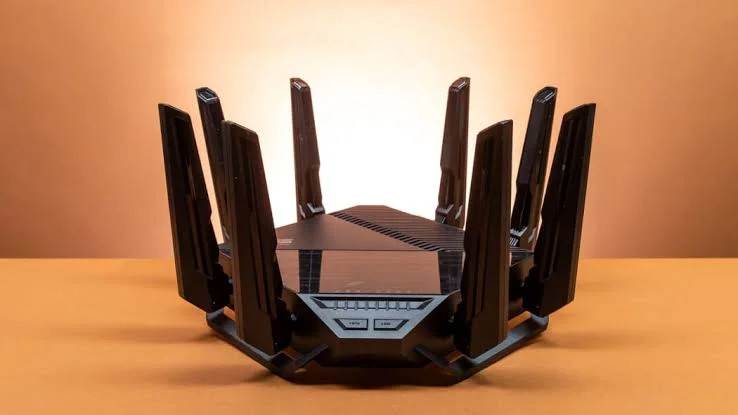
Most consumers in 2026 have no need to rush for Wi-Fi 8 routers. Wi-Fi 7 is a well-established choice compared to the still-in-development 802.11bn standard, and existing devices can take advantage of Wi-Fi 6, Wi-Fi 6E and Wi-Fi 7.
If you need a router today, consider your broadband speed, the size of your house, number of connected devices, number of Ethernet ports, support for mesh and security features.
Security still matters, no matter what Wi-Fi generation you’re on. Microsoft recommends WPA3 for wireless networks that support it. NIST focuses on safe WLAN configuration and monitoring across the whole WLAN lifespan.
Benefits Of Wi-Fi 8
The projected benefits of Wi-Fi 8 are:
- Improved wireless dependability
- Lower latency in tough settings
- Less packet loss
- Improved performance in dense networks
- Enhanced roaming between access stations
- Better performance in the fringe of coverage
- More efficient use of the spectrum
- Improved support for industrial and mission-critical applications
- Better performance for linked households
- Enhanced network experience in high-density settings
Ultimately, the largest Wi-Fi 8 benefits may just be about consistency — not just earning the best benchmark score.
Conclusion
Wi-Fi 8 is a game changer in wireless networking. The key focus of Wi-Fi 7 is extreme high throughput, while the next generation is being intended to deliver Ultra High Reliability, greater roaming, increased coverage, lower latency and more consistent performance in demanding conditions. Wi-Fi 8, aka IEEE 802.11bn, is still in development in 2026, with completion expected around 2028.
Wi-Fi 8 versus Wi-Fi 7: Which one is better? The answer depends on the timing and your requirements. Wi-Fi 7 is the logical choice for those who want high-performance wireless networking now, and Wi-Fi 8 is a technology to watch for future networks where reliability and consistent performance are just as important as speed.
Frequently Asked Questions
1. What is Wi-Fi 8 and how does it work?
The next generation is likely to be Wi-Fi 8, based on IEEE 802.11bn. Built on Ultra High Reliability, the technology uses wireless coordination, spectrum utilisation, roaming, coverage improvements and latency improvements to deliver more reliable communication.
2. Is Wi-Fi 8 faster than Wi-Fi 7?
Wi-Fi 8 is supposed to be a throughput monster, although the primary goal is not necessarily just increased peak speed. Wi-Fi 7 is centred around very fast throughput, Wi-Fi 8 is more about dependability, latency, coverage and coordinated operation.
3. What are the features of Wi-Fi 8?
Key expected features of Wi-Fi 8 include Ultra High Reliability, Multi-AP Coordination, improved roaming, Enhanced Long Range, higher spectrum efficiency, and technologies to reduce latency and packet loss.
4. When will Wi-Fi 8 be released?
Wi-Fi 8 is projected to be released around 2028, according to the current IEEE 802.11bn development schedule. When Wi-Fi 8 devices and routers will be commercially available exactly depends on final standardisation and product introductions from vendors.
5. Do I need a Wi-Fi 8 router?
You probably won’t need to buy a Wi-Fi 8 router just yet. By 2026, Wi-Fi 6/6E and Wi-Fi 7 will already be able to deliver great performance. If you need a new router today, choose one that suits your internet speed, coverage, number of devices and security needs.
Check Out Our Tools
Looking for helpful technology and cybersecurity resources? Learn about useful tools for everyday technology, networking, and digital-security chores found on ExplainMeTech. Discover our tools: https://explainmetech.com/tools/
References
- IEEE – 802.11 Working Group / Wi-Fi 8 (802.11bn)
IEEE 802.11 Working Group - IEEE – P802.11bn: Enhancements for Ultra High Reliability
IEEE P802.11bn Standard - IEEE – 802.11 Project Timelines
IEEE 802.11 Timelines - NIST – Guidelines for Securing Wireless Local Area Networks (WLANs)
NIST SP 800-153: WLAN Security - NIST – Establishing Wireless Robust Security Networks
NIST SP 800-97: Wireless Security
For more useful technology, cybersecurity and digital-security ideas, visit ExplainMeTech.com and check out our latest guides, tools and insights.