
If you’re new to Linux, you should learn how files and folders This hierarchy organises other folders and mounted file systems. What is a Linux file system? A Beginner’s Guide describes how Linux stores, organises, accesses and protects data. Linux uses one directory tree that starts with / instead of operating systems that have drive letters. The Linux File System offers a structured environment for applications, users, configuration files, temporary data, devices and system resources.
What Is A Linux File System?
Linux File System: Linux manages and organises files and directories on a computer using the Linux File System. The root directory, denoted by /, is the beginning of all things. From this root the other branches, system administrators use the files in this directory to configure networking, services, authentication, and other operating system settings. to store different kinds of information.
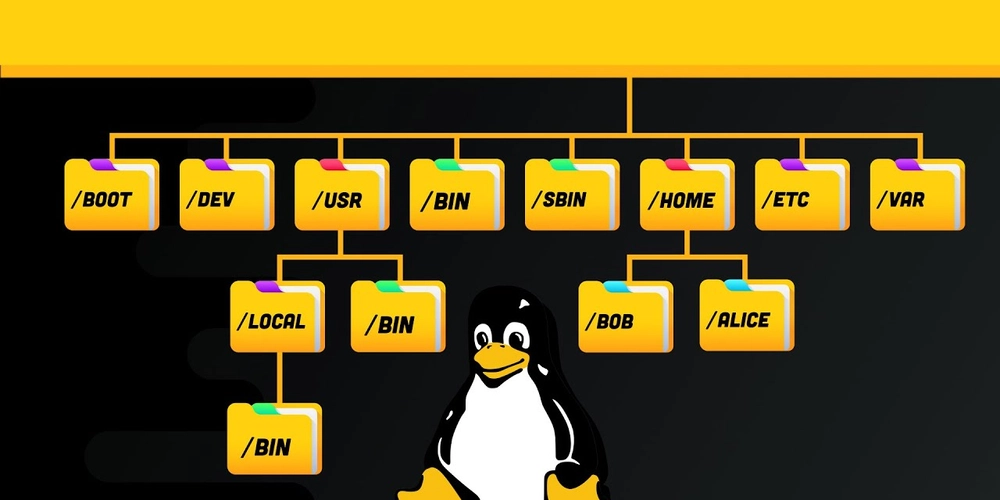
The Linux reporting tool is set up hierarchically. This means that the folder can contain documents and other folders, creating a tree shape. The layout makes it simple for customers and administrators to locate system files, applications, configuration files, logs, and personal data.
For example, non-public character files are often placed under /domestic, device configuration files under /, many other ephemeral files under /tmp, and device-wide applications and libraries under /usr.
How Does The Linux File System Work?
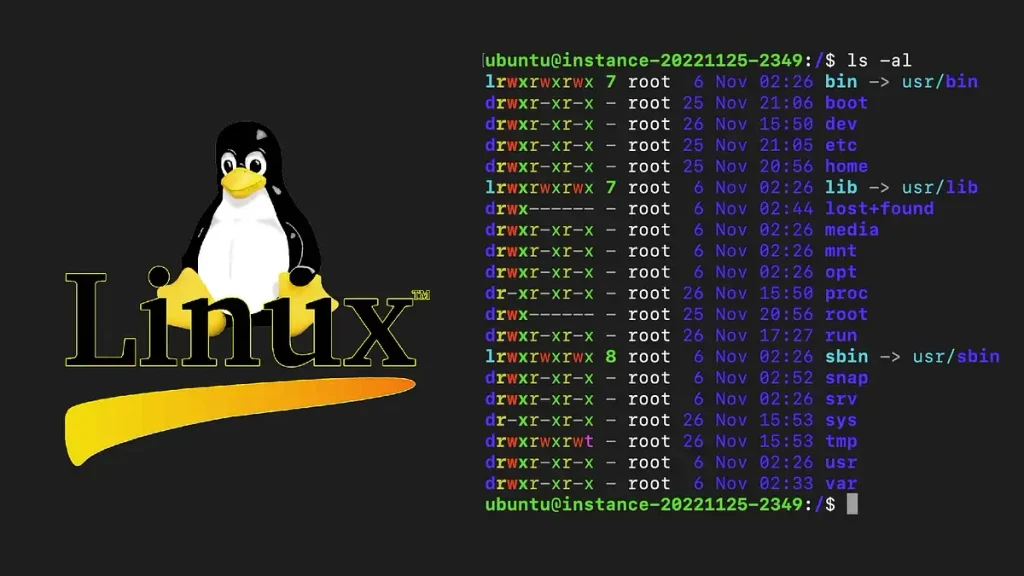
Linux File System: This section covers directories, files, permissions, ownership, and file system types. When a program tries to access a file, Linux checks the path and determines if the person or method has sufficient permissions.
The Linux file system’s report interface allows access to many gadget sources. Paths can represent common files, folders, devices, and various resources.
At the apex of the hierarchy is the base list. A typical Linux directory format looks like this:
/
├── bin
├── boot
├── dev
├── etc.
├── home
├── lib
├── media
├── mnt
├── opt
├── proc
├── root
├── run
├── tmp
├── usr
└── var
The specific structure may vary among different Linux distributions, but the essential organisation is the same.
Important Linux File System Directories
If you learn the major folders, the Linux file system will be much easier for beginners to understand.
/
The / directory is the root of the complete Linux file system. Other folders and mounted file systems are organised in this hierarchy. /home
/home
The /home directory generally contains the personal directories of standard users.
For example:
/home/alex
/home/john
Users usually save documents, downloads, projects, images and other personal data here.
/etc
The /etc directory contains various configuration files that are system-wide. Files in this directory are used by system administrators to configure networking, services, authentication and other operating system settings.
/var
The /var directory holds variable data; these can be log files, caches, queues, databases, or application-related information.
/tmp
The /tmp is a popular spot for applications and users to store temporary files. Depending on the Linux distribution and how it is configured, temporary data may be automatically deleted.
/usr
The /usr hierarchy contains many user-domain applications, libraries, documents, and other assets that the management device and application can access. using the management device and application.
/dev
The /dev directory provides smart devices and resource interfaces. These interfaces allow Linux applications to talk to hardware.
/proc
The /proc directory is a digital file system that exposes records of the energetic strategy, memory, hardware, and various functions of the Linux kernel.
/root
Normally, the /root directory is the home directory of the root user. Do not confuse it with /; it being the basis of the entire hierarchy of directories.
Linux File System Permissions
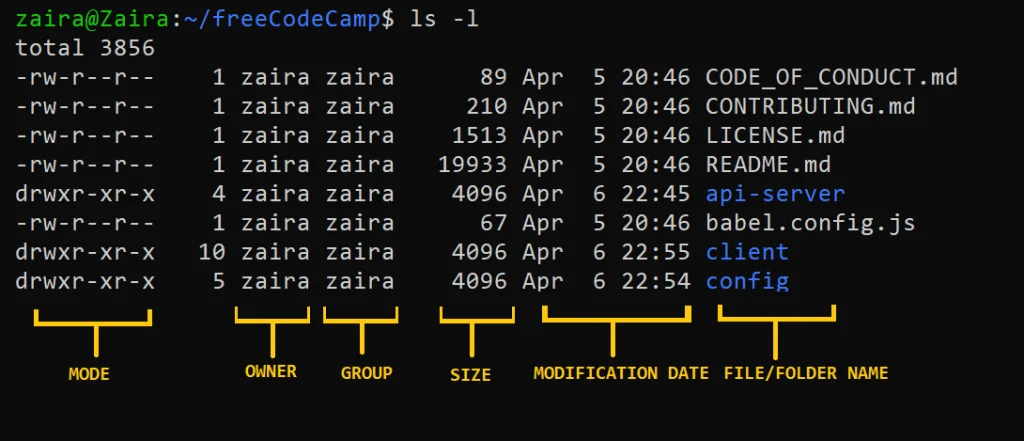
Linux File System is an important feature of security. Permissions are how Linux controls who can read/write/execute files and access directories.
The permissions for Linux are usually split into three different types:
User: The owner of the file.
Group: Users with Group privileges on the file.
Others: Other users of the system.
The three main permissions are:
- r — Read
- w — Write
- x — Execute
For example:
-rwxr-xr–
This permission structure gives varying levels of access to the file owner, group and others.
The Linux File System additionally controls access with ownership information and operations like chmod, chown, and umask.
For example:
chmod 644 document.txt
In this permission setup, the file owner usually has read and write permissions, and the group and other users have read permissions.
Common Linux File System Types
The Linux File System supports numerous Filesystem formats . Filesystems have varied features and performance.
Commonly encountered filesystem types include:
Ext4
Ext4 is one of the most common file systems in Linux. It is typically seen on Linux desktops/servers.
XFS
XFS is a high-performance filesystem commonly used on servers and enterprise contexts.
Btrfs
Btrfs is a contemporary file system with features including snapshots, checksums and intelligent storage management.
tmpfs
tmpfs is a temporary filesystem (mostly in system memory) which can be used for temporary data.
FAT and exFAT
FAT and exFAT are the usual file systems when you are using Linux with external storage devices and other operating systems.
NTFS
NTFS is more frequently associated with Windows , however you can access NTFS from Linux if you are using Windows formatted storage .
How To View The Linux File System?
You are able to browse the Linux File System with simple terminal commands.
pwd
The pwd command shows your current working directory.
pwd
ls
The ls command displays files and directories.
ls
For detailed information:
ls -l
cd
The cd command changes your current directory.
cd /home
find
The find command can search for files and directories.
find /home -name “*.txt”
df
The df command displays available and used disk space.
df -h
du
The du command shows how much storage files or directories are using.
du -sh /home
These commands are helpful for students, developers, system admins and cybersecurity professionals studying the Linux File System.
Real Example
Finding a User’s Files
Suppose we have a Linux machine with a user Alex. Inside Alex’s personal files might be:
/home/alex
Alex can visit the directory with:
cd /home/alex/
Then the user can see the files by executing:
ls -l
This is a basic illustration of how the Linux File System stores personal information in a predefined area.
Investigating Server Logs
A system admin sees something odd on a Linux server. One of the first places they might look is the system log directory.
They can navigate to:
cd /var/log
Then list available log files:
ls -l
Log files can assist administrators in troubleshooting system problems, investigating application faults, and identifying potentially suspicious activity.
This shows the utility of understanding the Linux File System for system administration and cyber security.
Linux File System And Cybersecurity
Linux File System is especially crucial for cybersecurity since improper permissions might result in the exposure of critical information.
The idea of least privilege says that users and processes should be given only the permissions they need to do their jobs. This limits the possible effect of unauthorised access.
File paths can potentially lead to security issues for apps that do not validate user input appropriately. For example, path traversal attacks attempt to access files outside of the application’s expected directory.
Therefore, cybersecurity specialists need knowledge of directory structures, file ownership, permissions, logs, and locations of application data.
Understanding the Linux File System can also help security students know how files and directories interact with Linux-based servers, security tools and applications.
Why Is The Linux File System Important?
Users are advised to know the Linux File System because:
- Feel confident working with Linux systems.
- Find configuration files.
- Manage personal and app data.
- Learn about file permissions.
- Identify storage concerns.
- Check the system logs.
- Boost server security.
- Work well with the command line tools.
- Learn how apps access files.
- Strengthen Linux Administration skills.
This is very helpful for students of cybersecurity. Most of the tools, servers and security labs used for cybersecurity are in Linux settings.
Tips For Linux Beginners
If you are studying the Linux File System , start with the most important directories and don’t try to memorise everything at once.
Commands to practise include:
Practice commands such as:
- pwd
- ls
- cd
- mkdir
- touch
- cp
- mv
- rm
- find
- df
- du
Don’t use the root account unless it’s needed . Executing commands with high privileges may unintentionally change or eliminate vital system files.
It’s also a good idea to give it a shot in a virtual machine or non-critical Linux environment. This gives newbies a safe place to learn instructions without risking crucial data.
Conclusion
The Linux File System is the core of a Linux environment and it is the structure that organises files, directories, programs, configurations, logs and system resources. Knowing the main directories like /, / home, / etc, / var, / tmp, / usr, / dev makes it easy to navigate and manage Linux . File permissions, ownership, filesystem kinds and fundamental commands like ls, cd, pwd, search and df are all things that a newbie has to learn. Whether you’re a student, developer, system administrator, or cybersecurity learner, a strong understanding of the Linux File System is a critical foundation for working safely and efficiently with Linux systems.
Frequently Asked Questions
1. What is the Linux File System?
The Linux File System is the hierarchy that Linux utilises to store files, directories, configuration data, applications, user data, and system resources.
2. What is the root directory in Linux?
The root directory is marked by /. It is the root of the Linux directory structure, with all other directories branching off of it.
3. What is the most commonly used Linux filesystem?
Ext4 is a very common file system format you may meet in Linux. But Linux also supports other filesystems as XFS, Btrfs, FAT, exFAT and NTFS.
4. What are Linux file permissions?
Linux file permissions define whether users and groups can read, write or execute files and access directories. These are an important feature of Linux security.
5. Why should cybersecurity students learn the Linux File System?
The Linux File System teaches cybersecurity students about Linux servers, file permissions, system logs, application files, security tools, and system investigations.
Try Our Cybersecurity And Technology Tools
Want to test your cybersecurity and technological knowledge? Explore the ExplainMeTech Tools Page. These tools are helpful for routine technical tasks and offer useful resources for students, developers, IT professionals and cybersecurity learners.
References
Filesystem Hierarchy Standard (FHS)
Filesystem Hierarchy Standard
OWASP – Path Traversal
OWASP Path Traversal
NIST – Least Privilege
NIST Least Privilege
Microsoft Learn – File Permissions for WSL
Microsoft Learn: File Permissions for WSL
For more helpful technology, cybersecurity, and digital-security tips, visit ExplainMeTech.com and explore our latest guides, tools, and insights.