
What is a Reverse Shell? A reverse shell is when an attacker connects to a target machine from the attacker’s machine. This is the opposite of a normal shell, where the target machine connects to the attacker’s machine. Reverse Shell Attacks and Defence Understanding is a key topic regarding cybersecurity for students, developers, system administrators and security experts. A Reverse Shell is a communication technique that could provide you remote command access to a machine you’ve compromised.
This is particularly problematic because organisations often put a lot of effort into limiting incoming connections. Outbound connections may be less scrutinised, especially if the infected machine is permitted to contact with external services. By understanding how these attacks work, security teams can improve network monitoring, endpoint protection, application security and incident response.
What Is A Reverse Shell?

A Reverse Shell is a shell that is initiated from a distant system to the command line shell of another system when an outbound connection is established. A hacked process may be used by an attacker to establish this form of communication if they have successfully compromised a susceptible application.
With communication established , the attacker may attempt to execute commands , analyse the environment , access files , identify other systems , or create further persistence . The actual capabilities rely on the permissions of the infected process.
The approach can also occur during authorised penetration testing. Security specialists are able to employ controlled shell connections to see if an organization’s defences can detect unauthorised remote command activity. What security teams need to do is look at the full context and not just assume that every anomalous shell connection is automatically bad.
How Does A Reverse Shell Attack Work?
A Reverse Shell attack usually has multiple steps. First an attacker needs an initial access vector. This can include exploiting a weak online application, leveraging command injection, stealing credentials, exploiting an exposed service or sending malicious software.
Once the attacker has code execution, he attempts to get the compromised system to make an outbound connection. The remote system can then communicate with the hacked host across that connection.
A simple attack sequence:
1. The attacker finds a vulnerable system.
2. Initial entry via a vulnerability or stolen credential.
3. Malicious instructions execution on the target.
4. The hacked system makes an outbound connection.
5. The remote operator reaches the available shell.
6. The attacker conducts discovery or other post-compromise activities.
7. The attacker may attempt to escalate privileges or move laterally.
This technique highlights the importance of both vulnerability management and behavioural monitoring.
Why Is This Attack Dangerous?
A Reverse Shell can escalate a limited application breach to full system access. For example, a vulnerable web application running with elevated operating-system rights could allow an attacker to access sensitive files or system resources through successful command execution.
The risk is even greater if the compromised server stores credentials, API keys, database info, customer data or access to internal systems. Attackers may potentially exploit a hacked machine as a stepping stone to launch other attacks.
The other big issue is outbound communication. Many organisations have good controls over incoming traffic but open wide outbound connections for their servers. Attackers may exploit this difference.
Google Cloud’s security documentation discusses detections of compromised workloads communicating with attacker-controlled systems and recommends evaluating the associated process, container, node, and network behaviour.
Common Attack Vectors
There are some vulnerabilities that can cause a Reverse Shell. One big example is OS command injection . This happens when an application inappropriately processes user-controlled input and lets that input affect operating-system commands.
Other potential entry points include:
- Vulnerable web applications
- Unpatched operating systems
- Exposed administrative services
- Weak or stolen credentials
- Malicious files
- Vulnerable plugins and frameworks
- Poorly secured containers
- Misconfigured cloud workloads
- Unsafe application programming practices
OWASP advocates avoiding direct execution of operating-system commands if possible. When command execution is necessary, developers must use safer APIs, proper input validation, allow lists, parameterisation and least-privilege permissions.
Signs Of A Reverse Shell
Security teams should watch for unexpected combinations of process and network activities. An example is when the webserver abruptly starts a command interpreter.
Other indicators could be:
- Unexpected outbound connections from servers
- Database process spawning a shell
- Scripting engines making strange network connections
- New connections to new outside addresses
- Command interpreters operating with application accounts
- Suspicious parent/child process relationships
- DNS requests that are not usual
- Unanticipated container behaviour
- Connections soon following suspicious application queries
Not one symptom is necessarily a sign of compromise . However, the presence of numerous signs together should prompt an investigation.
How To Detect A Reverse Shell?
Detection has to be seen across multiple layers of protection to be successful. Endpoint detection and response systems can watch processes, command interpreters, network connections and parent-child relationships.
Network monitoring can spot abnormal outbound destinations, connection patterns, DNS activity and odd protocols. Application logs can assist investigators in determining if strange network activity occurred before or after a malicious request or exploitation attempt.
Security Information and Event Management solutions are able to bring together these different sources. For example, a suspicious internet request combined with unusual process creation and an outbound connection gives a much better detection signal than any single event.
How To Prevent A Reverse Shell?
Defence-in-depth should be used by organisations rather than relying on a single security control.
1.Patch systems regularly
Security issues in internet-facing apps need to be fixed promptly. Organisations should be watching apps, operating systems, frameworks, plugins and cloud workloads.
2. Apply Least Privilege
Applications should operate with the least privileges necessary. A compromised program with limited rights gives an attacker fewer possibilities.
3. Restrict Outbound Traffic
Egress filtering can block systems from freely connecting with unknown external destinations. Organisations need to have explicit standards for which servers can access external networks.
4. Secure Applications
Developers should not perform unsafe commands, check untrusted input. By following code best practices, you may greatly reduce the risk of command injection attacks.
5. Monitor Endpoint Activity
Endpoint monitoring should be able to detect unusual shells, scripting and network connections. Behavioural detection is especially useful because attackers can use legitimate system utilities during an intrusion.
6. Segment Networks
Network segmentation inhibits lateral movement from a compromised system to another by an attacker. Critical databases and management systems should not be accessible through the normal application servers.
Real Example
Google Cloud
Google Cloud logs a real-world detection scenario with a compromised workload that requires a remote connected socket to communicate. This action can be an indicator of an attacker having interactive access to a workload.
This example shows why cloud security monitoring has to examine network traffic and process behaviour. Security teams can evaluate the impacted workload, process information, container information, logs and other indicators of compromise to identify if a compromise has taken place.
There is also an important lesson from this case: network traffic alone, may not be enough information. Network events combined with process telemetry give a lot more evidence.
Microsoft Security Investigation
Microsoft said it was the target of an intrusion exploiting CVE-2026-73570, an unauthenticated command injection flaw in internet-facing mail servers. Microsoft saw activity including a Reverse Shell and connections to attacker controlled-infrastructure.
This case is a good example of how an internet facing vulnerability can result in interactive remote access. It also stresses the need for prompt patching of susceptible systems, identifying abnormal process behaviour and analysing unusual outbound connections.
As such, companies need to combine vulnerability management with endpoint detection and network monitoring, rather than relying on patching alone as a preventative measure.
Reverse Shell Vs Bind Shells
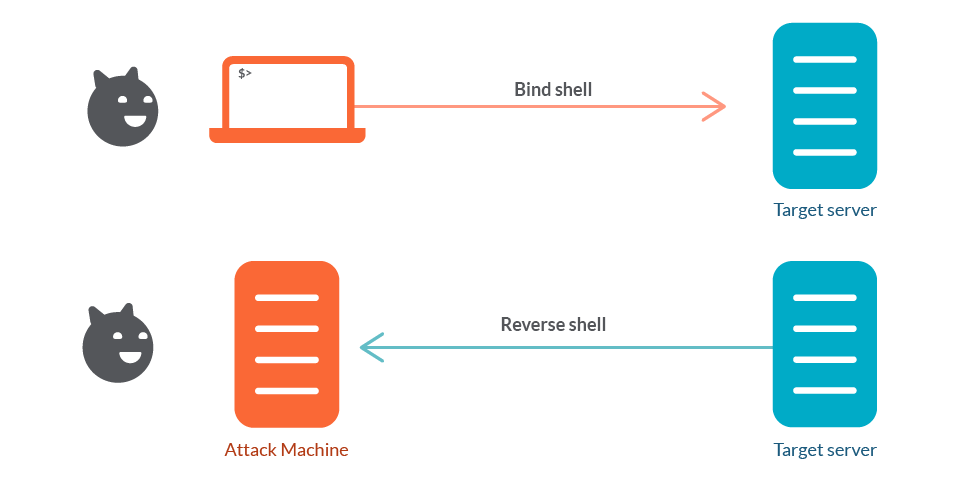
The infected machine then talks to the remote operator using a Reverse Shell . The computer being hacked waits for a connection . This is a bind shell.
This is an important distinction because network security rules might be implemented differently on inbound and outbound traffic. Strong egress constraints can thus make some attack routes more difficult.
Incident Response
If security workers detect a suspected Reverse Shell, they should consider the incident as a potential security problem.
You could want to isolate the problematic equipment to prevent further communication or lateral movement. The security teams need to log the necessary things and analyse the procedure that made the connection.
Investigators should establish:
- Initial access vector for the attacker
- Which account has been compromised
- What process made the connection
- The external destination contacted
- Whether more systems were accessed
- Whether credentials were exposed
- Whether persistence mechanisms were created
- Whether sensitive information was accessed
For incident response guidance, see NIST SP 800-61 Revision 3 . It emphasises planning, detection, response and recovery activities.
Best Practices For Security Teams
A good defence plan includes secure application development, vulnerability management, endpoint monitoring, network segmentation, outbound traffic controls, centralised logging and least privilege.
Security teams should also regularly test their monitoring systems in approved environments. Controlled security exercises can be performed to evaluate if suspicious process and network behaviour results in useful alarms.
Organisations should have incident response procedures in place before an issue happens. Clear rules mean security teams can respond more quickly when they find suspicious remote-access activities.
Conclusion
An interesting concept related to cybersecurity is a Reverse Shell, which shows how the initial vulnerability can be converted into interactive remote access by an attacker. This type of attack can be made further easier by the use of vulnerable programs, command injection, exposed services, stolen passwords and poor system settings.
Protection comes in many layers, and good protection comes in many layers. Regular patching, secure coding, least privilege permissions, network segmentation, outbound traffic filtering, endpoint monitoring and centralised logging can go a long way to mitigating the risk.
Frequently Asked Questions
1. What is the function of Reverse shell?
The Reverse Shell allows interactive command access from a hacked machine to a distant system . This approach may be used by attackers once they have gained initial access and controlled versions can be used by penetration testers to evaluate security monitoring and defensive devices.
2. Is a reverse shell always malware?
Nope. And the technology itself is not inherently wicked. The same methodologies can be used for security research, authorised penetration testing and cybersecurity training labs. Authorisation, context, destination, process behaviour and the purpose of the connection are key aspects.
3. Does firewall prevent reverse shell?
You can lessen the danger via firewalls and limiting traffic outbound. But enterprises shouldn’t rely simply on firewalls. Egress filtering, endpoint monitoring, network segmentation, application security and least-privilege policies give further protections.
4. How Security Teams Detect A Reverse Shell ?
Detection may be by abnormal process formation, command interpreters, outbound connections, DNS requests, parent-child process interactions. The combination of endpoint and network telemetry often results in better detection than either data source alone.
5. What to do if I locate a Reverse Shell ?
Treat this conduct as a potential security incident. Quarantine the affected system, if necessary. Save the evidence. 2. Identify first point of entrance. Review any accounts and procedures impacted. Eliminate the source. And monitor any related systems for any more suspicious activity.
Try Our Tools
ExplainMeTech is a storehouse of must-have technology and cybersecurity tools for students, developers, IT professionals, and anybody learning about cybersecurity. On the ExplainMeTech tools page you can find handy tools for networking, security testing, troubleshooting and learning about technology.
References
OWASP – OS Command Injection Defense Cheat Sheet
OWASP – OS Command Injection Defense Cheat Sheet
NIST – SP 800-61 Revision 3: Incident Response
NIST – SP 800-61 Revision 3
Google Cloud – Reverse Shell Detection
Google Cloud – Reverse Shell Detection
Microsoft Security – Unauthenticated Command Injection on Internet-Facing Mail Servers
Microsoft Security – CVE-2026-73570 Investigation
MITRE ATT&CK – Command and Scripting Interpreter
MITRE ATT&CK – Command and Scripting Interpreter
For more helpful technology, cybersecurity, and digital-security tips, visit ExplainMeTech.com and explore our latest guides, tools, and insights.