
If you have constructed a login system in the last couple of years, you have almost likely come across JWT Authentication. Behind single page apps, mobile backends, microservices, and even the “Sign in with Google” button sits . The premise is easy to love: you log in once and the server gives you a signed token, which you present on every subsequent request instead of submitting your password again. The problem is that simple ideas are implemented too sloppily. In this guide, we’ll explore how JWT Authentication works, what’s inside a token, and the exact places developers stumble.
What Is JWT Authentication And Why Do Developers Use It?
JWT stands for JSON Web Token, a compact format defined in RFC 7519 for passing claims between two parties. With JWT Authentication the server authenticates your credentials once and issues a token and the client sends that token back to the server in the Authorisation header as a Bearer value. The server does not need to query a database for a session. It verifies the signature, and trusts what’s inside. This is why JWT Authentication spreads so well across many servers: any service with the correct key can validate a token without contacting a central session store. The catch is that “stateless” also means “hard to revoke.” That one point explains half of the mistakes later in this piece.
JWT Header, Payload And Signature Explained
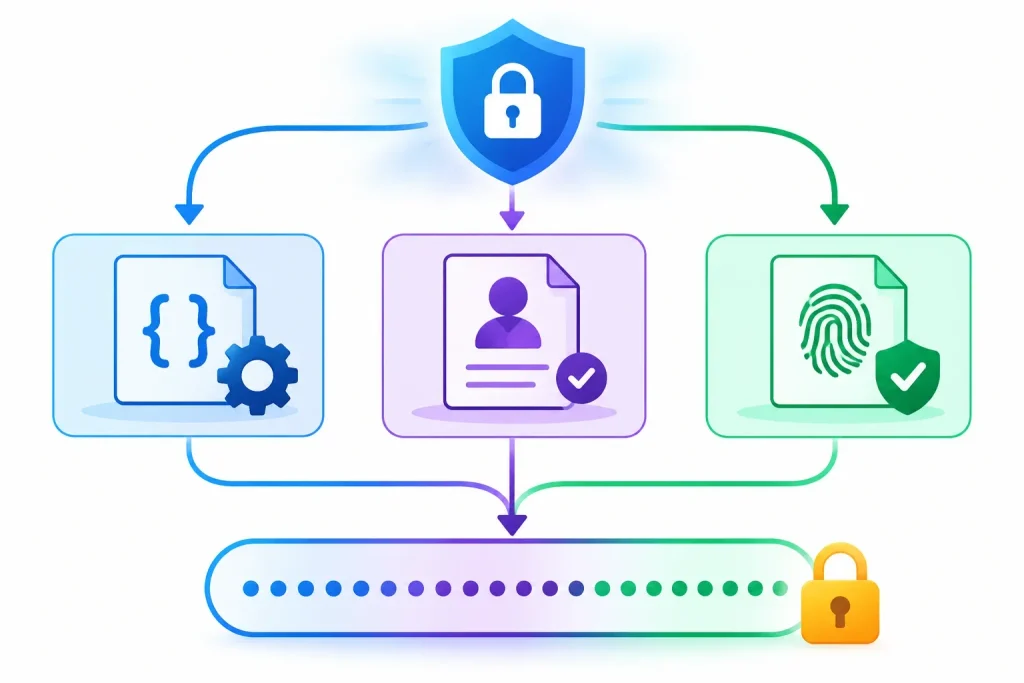
A JWT is three Base64URL strings separated by dots, like header.payload.signature. The header includes the signature algorithm (e.g., HS256 or RS256) and the token type. The payload has claims. They are sub for user, exp for expiry, iss for issuer, aud for audience and whatever other fields you pick. The first two portions are signed with a secret or a private key . This generates the signature so the server can identify tampering .
This is the step that beginners tend to skip. Base64URL is encoding, not encryption. Anybody can copy your token into a decoder and see the payload as plain text. The signature is proof that the token has not been modified, it does not hide anything. So don’t put passwords, personal details or API secrets in a regular signed token. If you really need privacy, check out the encrypted alternative, JWE, although most apps are better off keeping the payload tiny and boring.
Access Token Vs Refresh Token
Modern JWT Authentication typically employs two tokens. The access token is short-lived, often five to fifteen minutes, and is passed with every API call. The refresh token lives longer (days to weeks) and has one job: acquire a new access token when the previous one expires. An access token with a short life limits the impact if it leaks.
The refresh token is the more risky of the two, thus it demands tighter management. Store it in a HttpOnly, Secure, SameSite cookie, log it on the server, and rotate it on each use. If an old refresh token ever appears, then suspect theft and invalidate the complete token family. Refresh token rotation with reuse detection is the closest you can come to true revocation in a stateless design.
Common JWT Vulnerabilities Developers Overlook
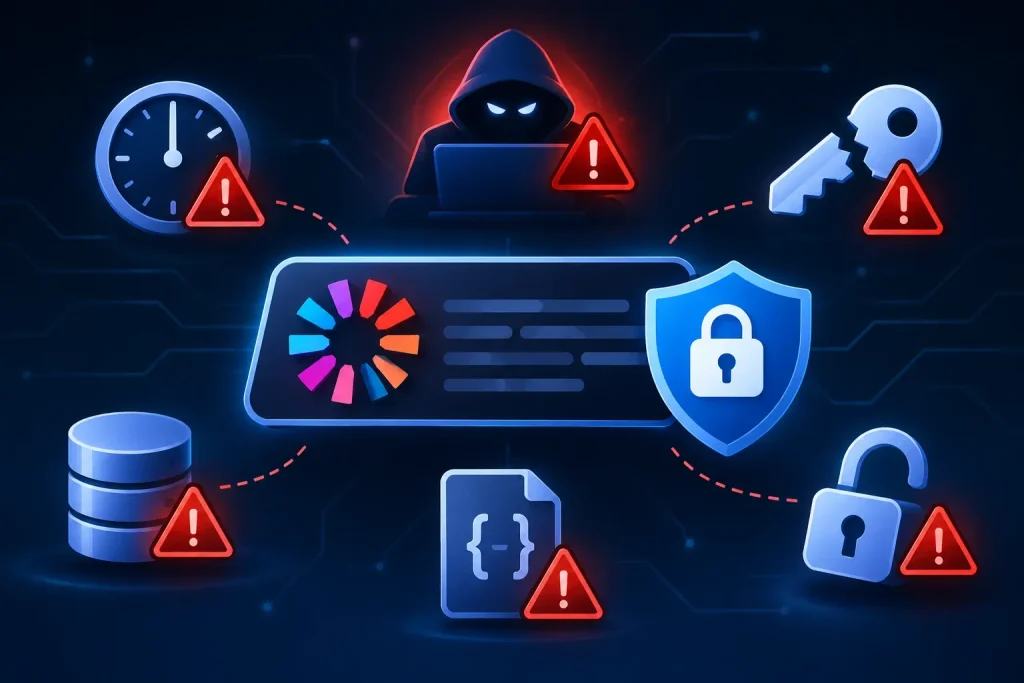
Most real-world incidents are not due to broken encryption. They stem from sloppiness in validation. The oldest trick is the “none” algorithm. Some libraries used to accept a token whose header said alg is none, and which had no signature at all. An attacker just modified the payload, and strolled in. A cousin of that is algorithm confusion. A server that expects RS256 but allows the token to select the algorithm can be exploited by an attacker who changes the algorithm to HS256 and signs it using the server’s public key, which is public by definition.
Another favourite is weak secrets. An HS256 key like “secret123” may be broken offline in minutes using tools like hashcat . Then bypassed the claim checks. If you don’t validate exp, iss and aud then a token intended for one service could be used for another. Finally header fields like kid , jku and jwk can point your server to attacker controlled keys if trusted blindly. Each of them degrades JWT Authentication in its own way, and each is preventable.
Token Theft And Replay Attacks
A JWT is a bearer token, which means that anyone who owns it is considered you. The server can’t tell the difference if someone takes it. The common attack vector is cross-site scripting, where any inserted script can read tokens stored in localStorage. Other breaches are browser extensions and tokens inserted in URLs.
A replay attack is just someone replaying a token they’ve captured before it expires. Good defences are layered: short expiration, HttpOnly cookies, HTTPS everywhere with HSTS, a unique jti claim recorded for sensitive actions, and sender-constrained tokens like DPoP or mTLS binding when the risk is significant. Deniallist for logouts and compromised accounts helps too, but costs a little of statelessness. Strong JWT Authentication is not about pretending theft won’t happen; it’s about limiting what a stolen token can achieve.
Real Example
The “none” Algorithm Bug (2015)
Security researcher Tim McLean reported (and later Auth0 wrote up) results in 2015 that numerous popular JWT libraries accepted the none algorithm and were subject to RS256-to-HS256 misunderstanding. Applications built on top of them might have had tokens created without any keys at all. The improvements were simple: libraries don’t reject anything by default any more and make the developer name the authorised algorithm. The lesson is simple: never let the token dictate how to validate it. This is still one of the simpler broken JWT Authentication situations, due to logic, not math.
Microsoft Storm-0558 Forged Tokens (2023)
Microsoft said in July 2023 that a threat group it tracks as Storm-0558 used an obtained Microsoft account consumer signing key to counterfeit Azure AD tokens and view email at perhaps 25 organisations, including government entities. Microsoft’s own analysis also found a token validation bug that would allow tokens signed with that consumer key to be accepted for enterprise mail. The lesson is combined keys and checks: regard signing keys as royal jewels, store them in hardware-backed storage, rotate them, validate issuer and audience tightly. Even giants can lose control of JWT Authentication when key handling and validation become out of sync.
Secure JWT Authentication Practices You Can Apply Today

Firstly you must pin the algorithm on the server and never read it from the token. For distributed systems consider asymmetric signing like RS256, ES256 or EdDSA. If you still use HS256, use large random secrets of at least 256 bits. Validate exp, nbf, iss and aud claims on every request. Keep access tokens short, Rotate refresh tokens, Store refresh tokens in HttpOnly cookies and not localStorage. Publish public keys via a secure JWKS endpoint . Use kid to rotate keys . Rotate keys on a schedule .
Use a maintained library, use it, update it, and never write your own signature checks. Do not log tokens. Rate limit login and refresh endpoints. Add tests for expired, tampered and wrong audience tokens. These procedures align with RFC 8725, the OWASP JWT recommendations, and NIST’s digital identity rules. By complying with these steps, JWT Authentication is made much tougher to breach.
Conclusion
JWT Authentication is not unsafe by design. It’s a sharp tool. Fast, scalable, and simple to misuse. Understand the three components of a token, differentiate access and refresh tokens, verify all, and anticipate token theft. Do so, and JWT Authentication becomes a good foundation for your APIs, not a liability.
Frequently Asked Questions
1. What does JWT Authentication mean in plain words?
It’s a way of logging in where, once you sign in, the server offers you a signed digital pass, the token. You send that with every request you make and the server will check the signature to make sure it’s real and hasn’t been tampered with.
2. Is JWT Authentication safe?
If done right, it can be. The format itself is strong. Weaknesses result from bad decisions such as weak secrets, unpinned algorithms, missing claim checks and unsafe storage. If you follow RFC 8725 and OWASP guidelines then it holds up nicely.
3. Where to save JWT in the browser?
Prefer HttpOnly, Secure, SameSite cookies JavaScript can’t read. localStorage is useful, but it exposes tokens to any XSS vulnerability. If you must use it, make tokens very short-lived.
4. What is the difference between access token and refresh token?
An access token calls your API and is short lived. Refresh tokens live longer and are used only to obtain new access tokens. Store in cycle and with special care.
5. Can a JWT be withdrawn before expiring?
Not natively, as servers don’t monitor granted tokens. Practical methods include short expiry, denylisting jti values, rotating refresh tokens and rotating signing keys in an emergency. JWT Authentication is created with this trade-off in mind.
Try Our Tools
Tokens are best learned through poking rather than reading. On our tools page there are free utilities for developers and security-minded readers, so you may check, test and learn without installing anything. Go to https://explainmetech.com/tools/ and use them with this article on JWT Authentication.
References
- OWASP, JSON Web Token for Java Cheat Sheet: https://cheatsheetseries.owasp.org/cheatsheets/JSON_Web_Token_for_Java_Cheat_Sheet.html
- IETF, RFC 8725: JSON Web Token Best Current Practices: https://datatracker.ietf.org/doc/html/rfc8725
- NIST, SP 800-63B Digital Identity Guidelines (Authentication and Lifecycle Management): https://pages.nist.gov/800-63-4/sp800-63b.html
- Microsoft Security Blog, Analysis of Storm-0558 techniques for unauthorized email access (July 2023): https://www.microsoft.com/en-us/security/blog/2023/07/14/analysis-of-storm-0558-techniques-for-unauthorized-email-access/
- Google Identity, Verify the Google ID token on your server side: https://developers.google.com/identity/gsi/web/guides/verify-google-id-token
If you want more tech, cybersecurity and digital-security ideas, check out our latest guides, tools and insights at ExplainMeTech.com.