Artificial Intelligence (AI) is a game changer in the cybersecurity world. As of 2026, AI agents are being deployed by corporations, security organisations and unfortunately, crooks. These smart systems can automate jobs, analyse extensive data, detect risks, and make decisions without constant supervision. With advancements in AI, a lot of people are asking an extremely important issue :
Can AI hack you?
The quick answer is yes – but not exactly what the films commonly portray. AI is only a tool. Like a computer, artificial intelligence may be used for good or evil. It can be employed to protect systems or utilised by attackers to conduct more sophisticated cyberattacks. So, let’s take a look at how AI agents are transforming cybersecurity in 2026, what new vulnerabilities they pose, and how we can stay secure.
What Are AI Agents?
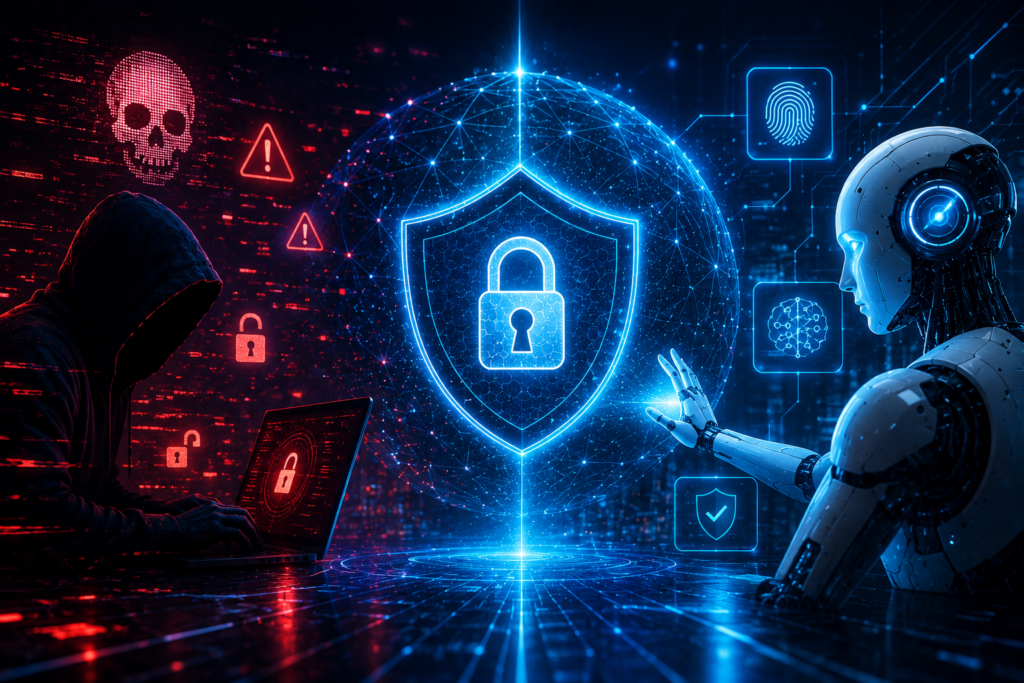
AI agents are software systems able to execute tasks autonomously. They can gather information, process data, make decisions and act according to particular objectives. AI agents learn from data in a flexible way as the situation changes, unlike traditional software that runs on rigid instructions.
For example:
- Security surveillance systems
- AI-enabled chatbots
- Detection of threats by automated tools
- Digital assistants
- Systems for vulnerability scanning
- Tools for incident response
Cybersecurity increasingly use AI agents to detect vulnerabilities faster than human experts.
Can AI Really Hack Someone?
AI does not just magically break into systems by itself. But cybercriminals may utilise AI to enhance their attack techniques.
AI can help attackers:
- Create convincing phishing emails
- Generate malware code
- Automate the reconnaissance
- Security flaws in software
- Speed up the cracking of weak passwords.
- Launch wide – scale social engineering attacks
This makes AI a tremendous force multiplier for crooks.
Instead of days of study to find a target, attackers may now deploy AI agents to gather information in minutes and automate much of the attack process.
How AI Agents Are Helping Cybersecurity?
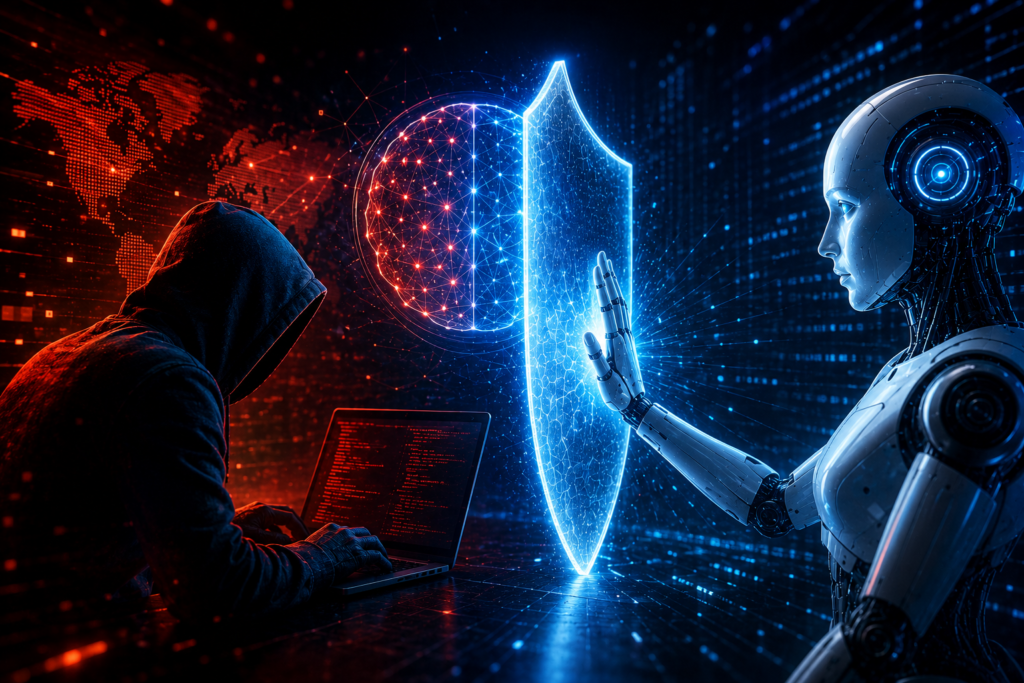
Fortunately, AI is also enhancing cybersecurity protections.
Security teams deploy AI agents to:
1. Detect Threats Faster
Millions of security incidents are generated by today’s networks daily. Human analysts can’t go through everything by hand. AI agents may evaluate logs, user behaviour and network traffic in real-time to identify suspicious activity.
2. Automate Incident Response
When a threat is seen, AI can automatically:
- Block malicious IP addresses
- Isolate infected devices
- Disable compromised accounts
- Alert security teams
This greatly reduces response times.
3. Identify Vulnerabilities
AI-based scanners can look for security holes before attackers can exploit them.
4. Reduce human Workload
Alert fatigue is a common issue for security forces. AI agents may weed out false positives and flag genuine dangers, so analysts can concentrate on the most crucial cases.
How Cybercriminals Use AI Agents?
AI benefits defences, but it benefits attackers too.
AI-Powered Phishing
Old-school phishing emails are full of spelling mistakes and bad grammar.
Today’s AI algorithms can generate professional-looking emails that impersonate real organisations.
Attackers can craft personalised messages using data collected from social media accounts and public websites.
AI-Generated Malware
Attackers sometimes employ AI technologies to help them write or change malicious malware.
This accelerates the development of new malware strains by crooks.
Automated Reconnaissance
The perpetrators acquire information about their victims before they strike.
AI agents can automatically collect:
- Names of staff
- Email IDs
- Company technologies
- Public records
- Social media info
This allows attackers to plan more focused attacks.
Deepfake Attacks
AI-made voice and video deepfakes are getting harder and harder to tell apart from the genuine thing.
Cybercriminals may pretend to be an executive, manager or trusted contact to deceive staff into transferring funds or revealing critical information.
Real Example
1: Deepfake CEO Scam
A finance worker gets a video call that purports to be from the company’s CEO.
The CEO is in a hurry, needing a transfer of funds for a confidential commercial deal.
The employee follows the directions since the voice and the look seem real.
Later investigators learn the call was a product of AI deepfake technology.
With the improvement of AI-generated audio and video, attacks like this have grown more widespread.
2: AI-Powered Phishing Campaign
You are a college student. Your college administration sends you an email.
The message refers to real courses, professors and events on campus.
The email is asking the student to authenticate the account by clicking a link.
The message looks legitimate so the student enters their login information.
The attackers then get access to the account and utilise it to launch subsequent phishing assaults.
These frauds are much more convincing because they’re AI-generated, rather than regular phishing emails.
Major Cybersecurity Risks Of AI In 2026
Increased Attack Speed
Attackers can use AI to automate repetitive processes, enabling them to scale attacks faster than ever before.
More Effective Social Engineering
AI-written texts sound more real and intimate, making scams harder to spot.
Lower Technical Barriers
People with little technological abilities can employ AI tools to assist in carrying out nefarious operations.
More Sophisticated Malware
Artificial intelligence can enable attackers customise their malicious code and avoid traditional protection solutions.
Data Privacy Issues
Many artificial intelligence (AI) systems handle vast volumes of personal and organisational data.
Poorly secured AI platforms are appealing targets for attackers.
How To Protect Yourself From AI-Powered Attacks?
Enable Multi-Factor Authentication (MFA)
MFA adds another layer of protection to your passwords. Security experts always advocate MFA since it minimises the chance of account compromise by a large margin.
Use Strong and Unique Passwords
Don’t use the same password for several accounts.
Use long, unique passwords or pass phrases for every service.
Verify Unusual Requests
Always check financial transactions, password resets, or sensitive requests through another channel.
Be Cautious With Emails and Messages
Some of the most harmful emails seem very professional.
Always check links before clicking on them.
Keep Your Software Updated
Regular updates will patch vulnerabilities attackers may try to exploit.
Learn About Deepfakes
Be suspicious of sudden voice calls, videos, or urgent requests for money or sensitive information.
The Future Of AI And Cybersecurity
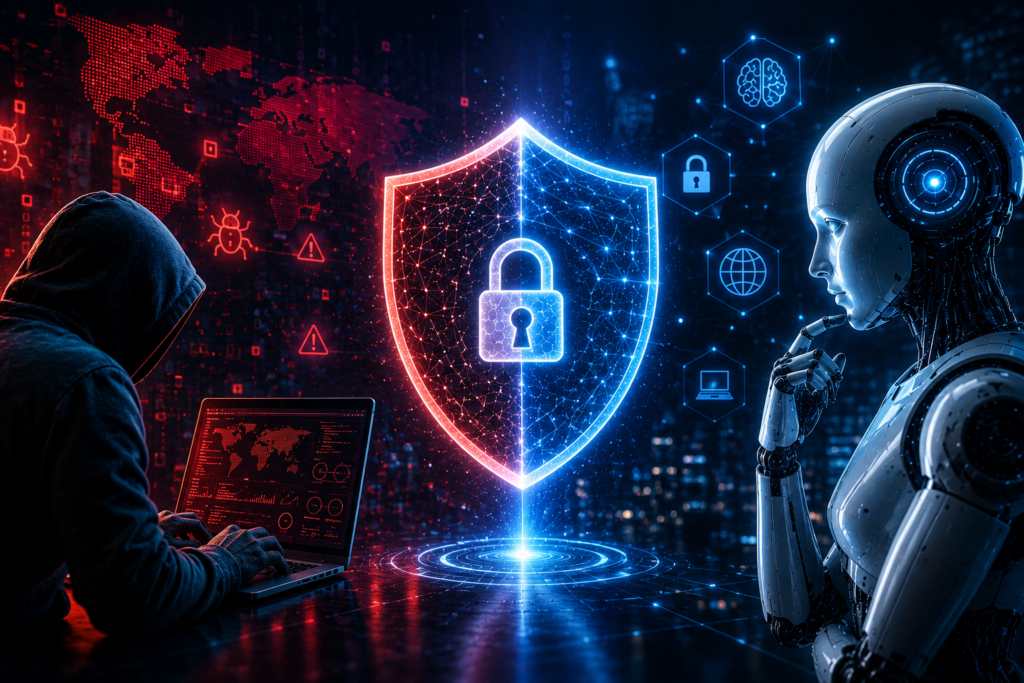
The fight between attackers and defenders is going on because of AI. Security teams are deploying AI agents to detect risks, automate actions and make security operations better. Meanwhile, thieves are using AI to construct more sophisticated phishing campaigns, automate attacks and better social engineering tactics.
In the future, we’ll probably see more advanced AI-powered security systems that can identify risks before they cause substantial harm. The organisations best equipped to protect themselves from the changing face of cyberattack will be those that combine AI tech with human skills.
Conclusion
So, can AI hack you?
Artificial intelligence can definitely be used to perform more effective attacks by hackers, but not in isolation. By 2026, AI agents will be changing the face of cybersecurity, enabling both defenders and attackers to act with greater speed and efficiency. The good news is that cybersecurity professionals are also embracing AI to improve attack detection, automate responses and beef up digital defences.
The greatest protection remains a combination of solid security procedures, user knowledge, regular upgrades, unique passwords and multi-factor authentication. “Staying current will be one of the most crucial cybersecurity skills in your toolkit as AI progresses.”
Frequently Asked Questions
1. Can my personal accounts be hacked by AI?
AI doesn’t breach accounts itself, but hackers can use AI technologies to better phishing attempts, password attacks, and social engineering frauds.
2. How risky are AI-generated phishing emails?
Yes. AI is able to write phishing emails that seem very convincing, legitimate, and personalised.
3. Can AI detect cyber threats?
Indeed. Many cybersecurity companies use AI vendors to monitor systems, spot unusual interest, and respond quickly to attacks.
4. What is an AI cybersecurity agent?
An AI agent is a software program capable of analysing, selecting, and performing preservation-related activities on records with minimal human intervention.
5. How can I protect myself from AI-powered cyberattacks?
Use strong passwords, request MFA, keep software applications up to date, be skeptical of frequent outgoing requests, and watch out for phishing-intensive content
Try Our Tools
Want to boost your online security? Visit ExplainMeTech to see the free security tools. Whether it’s password management tools or useful security utilities, our products can help you improve your digital safety and defend your accounts from modern cyber assaults.
Tools Page: https://explainmetech.com/tools/
References
- OWASP Authentication Cheat Sheet
OWASP Authentication Cheat Sheet - NIST Digital Identity Guidelines (SP 800-63B)
NIST SP 800-63B Authentication and Lifecycle Management - Microsoft Security Best Practices
Microsoft Security - Google Safety Center
Google Safety Center - Google Account Security Help
Google Account Security Guide
For more helpful technology, AI, cybersecurity, and digital security insights, visit ExplainMeTech.com and explore our latest guides, tutorials, and security resources.