
What does port scanning mean? A Beginner’s Guide is fantastic for anyone getting started with cybersecurity or networking. Ports are endpoints used by devices on a network to communicate with applications and services. Port scanning is a way to find out whether ports seem to be open, closed or filtered. NIST defines this as employing a program to find, remotely, which ports are open on a system.
This technique can enable students, system administrators, network engineers, penetration testers, and security teams to find superfluous services and cut down the attack surface exposed. Network port scanning is a typical technique in authorised network management and security audits.
What Is Port Scanning?
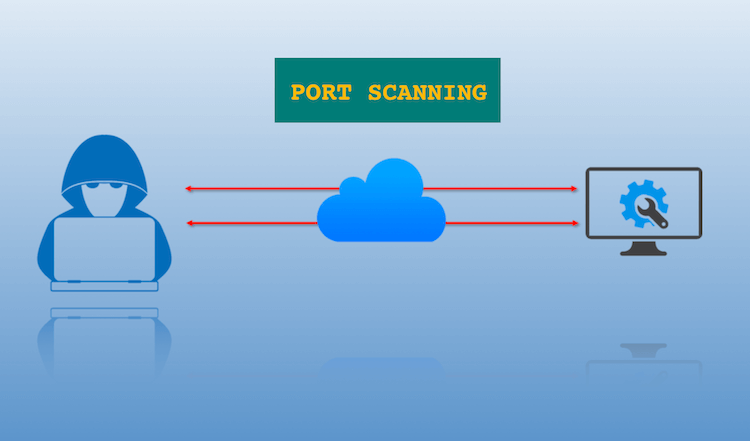
Port Scanning studies the response from the network on the ports you choose. A port scanner does not automatically exploit a target . Rather, it gives information on network reachability and services that could need further research.
Simple port scanning explained is like examining doors in a building. An open port usually implies that an application is listening, a closed port usually indicates that no program is accepting connections, and a filtered result usually indicates that a firewall or other security control is blocking the answer.
How Does Port Scanning Work?
How does port scanning operate? A scanner sends TCP or UDP probes to a host that it is authorised to scan, and logs the results. The way port scanning works relies on the protocol, scan method, firewall setup and behaviour of the target machine.
A basic workflow includes:
- Define the authorized host, subnet, or asset.
- Select ports or port ranges.
- Send suitable probes.
- Analyze the responses.
- Identify services when required.
- Review findings and reduce unnecessary exposure.
NIST states that network port and service identification can help to identify active hosts and services such as HTTP and FTP and can aid in security assessments.
Types Of Port Scanning
Common types are TCP Connect, SYN, UDP, FIN, NULL and XMAS scans.
TCP Connect Scan
TCP Connect scan Attempts a standard TCP connection. This is easy and can give clear information about TCP services. The activity may be obvious.
SYN Scan
A SYN scan delivers the initial TCP connection request and analyses the response without completing the normal connection process. Commonly used for authorised security testing.
UDP Scan
A UDP scan tests services over UDP. UDP lacks the handshake that TCP has. Firewalls might impact responses. This can make results more difficult to interpret.
FIN, NULL, and XMAS Scans
They are specific techniques that change the TCP flags to see how systems react. The results they get may depend on the operating system, firewall, and network setup.
Nmap describes several scanning techniques and states such as open, closed, filtered.
Why Is Port Scanning Important In Cybersecurity?

This provides visibility into attainable services for defenders. An enterprise may expect a server to simply expose HTTPS, yet find that an extraneous administration service is also accessible.
Port Scanning techniques can help with network inventory, penetration testing, firewall validation, vulnerability management and attack-surface inspections. OWASP suggests maintaining a regulated list of ports that an application needs and monitoring infrastructure for unintentional exposure.
Microsoft also allows authorised scanning of Azure resources as part of penetration testing, as long as the testers follow a set of rules of engagement.
Port Scanning Tools For Beginners
For beginners, port scanning tools should offer clear results and facilitate safe authorised practice. One of the most utilised alternatives is Nmap. It can detect the state of ports, use several scan methods and offer service information.
Another choice for security professionals and ethical hackers is OWASP Nettacker. OWASP describes it as “an automated network & vulnerability scanning framework that can be used to discover servers, services and port numbers for the purposes of auditing and penetration testing.”
Beginners should choose their own systems, lab networks, or intentionally vulnerable training environments. Never monitor random public systems without prior permission.
Port Scanning In Ethical Hacking
Port scanning is generally part of reconnaissance and enumeration in ethical hacking. Once scope and authorisation are set, an ethical hacker may use a Port Scanning tool to find out what services are accessible.
Results can direct subsequent scans for obsolete software, weak setups, exposed administration interfaces, or superfluous services. A scan does not alone prove a vulnerability. It points to an area that may need further detailed assessment.
The OWASP guidance also covers the discovery of non-standard ports and exposed infrastructure in authorised security testing.
How Hackers Use Port Scanning?
Port scanning is a primary concern of hackers in the field of cybersecurity, since it can be used in reconnaissance to discover exposed services, administration interfaces and potential entry points.
Horizontal Scanning is scanning the same port but various IPs. Vertical scanning is scanning one IP but different ports. Google Cloud documents this.
Repeated attempts to connect to several ports or hosts can indicate reconnaissance for the next phase in an assault. Security teams can then use network monitoring to spot unusual scanning activities.
Port Scanning Attacks Detection
Detection of port scan attacks First you have to look at firewall, router, endpoint and intrusion detection logs. NIST recommends that intrusion detection systems should detect typical port and host scanning patterns, such as stealth scans.
Security teams can look for multiple connection attempts, weird source addresses, sequential activity and traffic to large numbers of internal systems. Microsoft also describes the Windows behaviour in its port scanning prevention filter.
Detection should be augmented with firewalls, network segmentation, least-privilege access, rigorous authentication, patching, and removal of services that are not needed.
Two Real Life Examples
Microsoft Azure
Microsoft allows penetration testing with permitted scanning of Azure resources. It demonstrates the technique’s applicability for enabling defensive testing under a defined scope and rules of engagement.
Google Cloud
Google Cloud Security Command Center may report Port Scanning by AI agents. Its documentation describes horizontal and vertical patterns, and recommends reviewing relevant findings and logs to determine if the conduct is malicious.
Benefits And Limitations
Port Scanning Port scanning assists in visibility, assists in asset discovery, validate firewall set up and assists protection teams to detect unexpected vulnerability.
But the results are not usually conclusive. Firewalls, filters, community routes, application behaviour and the way the test is set up can also prevent scanners from seeing the whole picture. An open port doesn’t automatically represent a vulnerability and a filtered port doesn’t necessarily mean no service.
Responsible disclosure is not just test findings, it is also the right permission, provider identity, vulnerability assessment and configuration assessment.
Conclusion
Port scanning is a fundamental network security concept for students, administrators, ethical hackers and defenders. Teams learn how the approach works to analyse exposed services and improve network security.
When used appropriately, the approach can assist in asset discovery, firewall validation, security testing and threat detection. The trick is to scan only authorised systems and use the findings as evidence for further inquiry, not proof of compromise.
Frequently Asked Questions
1. What is port scanning in cyber security?
It is a means of scanning the ports of a network to detect whether ones appear to be open, closed or filtered. Security teams use it for authorised assessments, network inventory, exposure management, troubleshooting, and more.
2. What are the types of port scanning?
Common types are TCP Connect, SYN, UDP, FIN, NULL and XMAS scans. Both utilise different network behaviour and can produce various results based on the target and its security policies.
3. What are the best port scanning tools for beginners?
Nmap is a good first choice because it supports many sorts of scans and has rich documentation. Another solution for authorised network and security inspection is OWASP Nettacker.
4. Is port scanning illegal?
Scanning is not illegal by default , but scanning systems without authorisation can violate policies , terms of service or applicable laws . “Always get scope and authorisation before testing.”
5. How do organisations identify port scanning attacks?
In firewall, IDS, endpoint and network logs, they can search for repetitive connection attempts, strange sources, and horizontal or vertical patterns. Controls of access and network segmentation should be coupled with monitoring.
Try Our Tools
If you study cybersecurity, check the ExplainMeTech tools section for practical technology and security tools. Find the tools accessible here: https://explainmetech.com/tools/
References
- NIST — Port Scanning Glossary
NIST: Port Scanning - NIST SP 800-115 — Technical Guide to Information Security Testing and Assessment
NIST SP 800-115 - OWASP — Web Security Testing Guide
OWASP Web Security Testing Guide - Microsoft — Penetration Testing
Microsoft Azure Penetration Testing - Google Cloud — Security Command Center
Google Cloud Security Command Center
For more helpful technology, cybersecurity, and digital-security tips, visit ExplainMeTech.com and explore our latest guides, tools, and insights.