
With the number of sophisticated cyberattacks increasing every 12 months, my personal password is not enough to protect the money you owe online Even correct passwords can be stolen through phishing, malware, or information breaches.
That’s why multi-factor authentication (MFA) is one of the most effective cybersecurity measures we use today. Whether it’s your email, banking app, social media account, or system, MFA provides an additional layer of security and significantly reduces the likelihood of a person gaining access to them without your understanding.
In this guide, we can explore what multi-factor authentication (MFA) is, how it works, types of authentication factors, benefits, real-world examples, and why every online customer should turn it on in 2026.
What Is Multi-Factor Authentication (MFA)?
Multi-factor authentication (MFA) is a security measure that requires people to provide two or more independent credentials to verify their identity.
MFA uses multiple authentication strategies to ensure that the user attempting to log in is the actual account owner, not just a password anymore.
For instance, you might have to do some of the following, besides typing in your password:
- Input a one-time verification code provided to your phone
- Approve a notification in an authenticator app
- Scan your fingerprint
- Facial recognition
- Insert a security key
Even if a hacker steals your password, they still cannot access your account without the second authentication factor.
Why Passwords Alone Are No Longer Enough?
Passwords have guarded digital accounts for decades, but they are not without serious flaws.
Passwords are often exploited for the following reasons:
- Weak passwords
- Password sharing across several websites
- Phishing attacks
- Data leaks
- Keyloggers and malicious software
- Credential stuffing attacks
Millions of usernames and passwords are leaked every year. If your password is leaked, attackers will instantly try to log into your accounts.
MFA stops most of these types of attacks because a password alone is no longer enough.
How Multi-Factor Authentication Works?
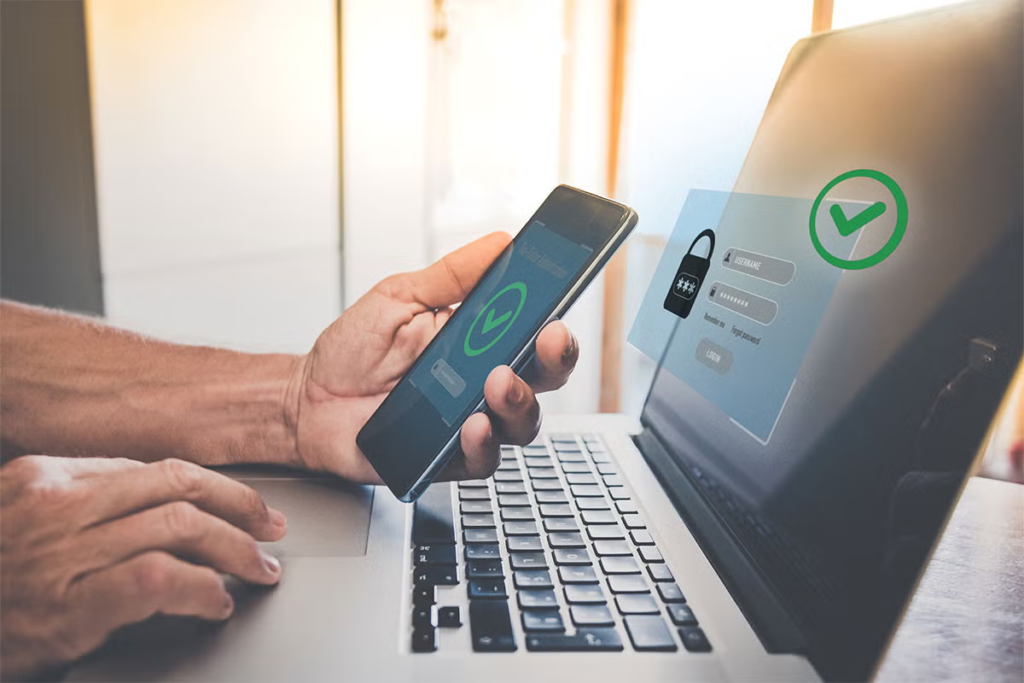
Logging in is easy, but considerably more secure.
Step 1: Enter Your Username
You provide your account username or email address.
Step 2: Type Your Password
Your password verifies the first authentication factor.
Step 3: Verify a Second Factor
The system requests for another kind of verification, such as:
- Authenticator app code
- SMS verification code
- finger print (or fingerprint)
- Face ID
- Hardware security key
- Email verification
Step 4: Access Granted
You can only access your account after successfully verifying both authentication factors.
The Three Key Factors Of Authentication
MFA works by using multiple categories of authentication.
1. Something you will know
This is information only you should have access to.
Here are some examples of how to use the function.
- Password
- PIN
- Security questions
This is usually the initial factor of authentication.
2. Something You Own
This is a physical device that you possess.
Examples:
- Cellphone
- Authenticator application
- Security key (hardware)
- smart-card
- One-time password generator.
This is one of the most common second factors.
3. Something You Are
It is based on your biology.
For example:
- Fingerprinting
- Face recognition.
- Iris scanning
- Voice recognition
Biometric authentication is becoming an increasingly common feature of smartphones and laptops.
Types Of MFA Verification Methods
SMS Verification
One of the most popular MFA strategies is SMS Verification. Once you have entered your username and password, a one-time verification code can be issued via text message on your registered mobile device. You must enter this code to complete the registration process. This technique is simple to use and is supported by most web services, and as a result is widely known among users. However, this is not the most consistent desire, as attackers can leverage SIM swap attacks or intercept text messages in some instances. SMS authentication is still better than my personal password, but security experts often offer to choose stronger options when they’re done.
Authentication Apps
Authentication tools such as Microsoft Authenticator and Google Authenticator create time-based one-time passwords (TOTPs) that are valid for 30 seconds. Once you’ve entered your password, just launch the app and enter the current verification code. These codes are created directly on your device, not on your mobile network, thus they are far more secure than SMS verification. They also don’t need an internet connection which makes them a reliable and recommended MFA choice for both personal and business accounts.
Push Notifications
Push notification authentication is a fast and simple way to log in. Instead of entering a verification code, you get a message on your registered smartphone asking if you want to confirm the login attempt. You started the login, touch “Approve” to go in. If you didn’t try to sign in, you can decline the request right away. This system is easy to use, yet provides high security, especially when combined with device verification and biometric authentication.
Biometric Authentication
Biometric authentication authenticates your identification with unique physical features such as fingerprint, facial recognition, iris scan or voice recognition. Biometric authentication is becoming increasingly widespread on modern smartphones, tablets and laptops as it is both convenient and secure. Biometric features are unique to each person and impossible to duplicate, adding another layer of security. But biometric authentication is normally deployed in conjunction with another authentication element, not as a sole security mechanism.
Hardware Security Keys
Hardware security keys are physical devices you plug into your computer or mobile device with USB, NFC or Bluetooth. And when you log in, you simply insert or tap the security key to prove who you are. These keys provide some of the highest levels of protection against phishing attempts since they directly authenticate with the actual website and are not readily fooled by phoney login pages. It means you have to lug around an extra device, but hardware security keys are highly recommended for protecting important accounts such as email, banking, cloud storage and business systems.
Benefits Of Multi-Factor Authentication
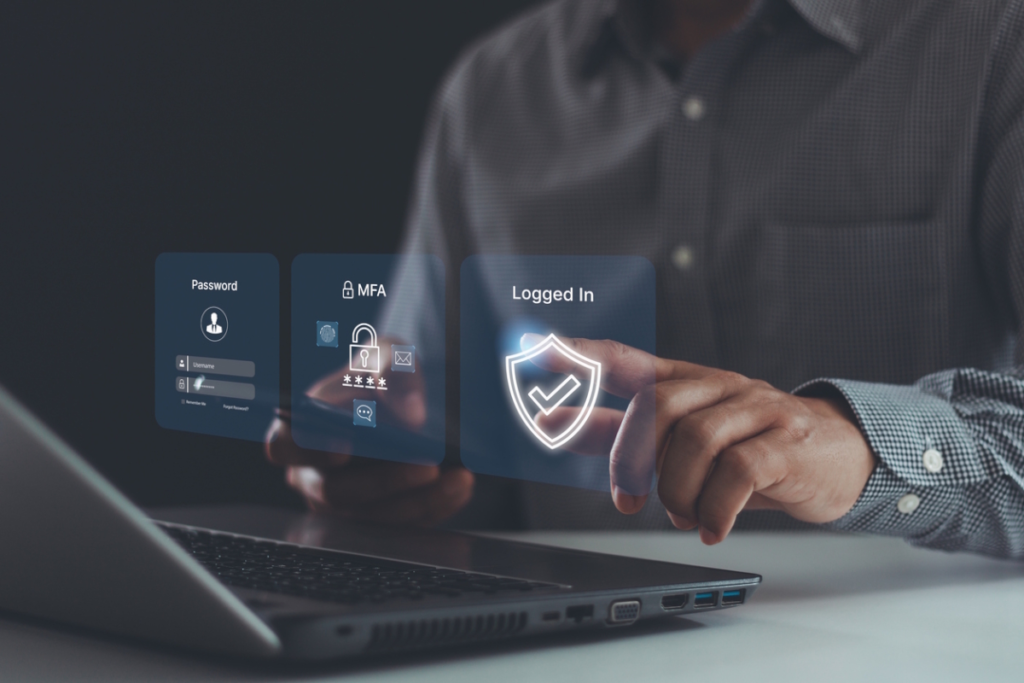
There are many security advantages of deploying MFA.
Stronger Account Protection
Even if someone gets your password, they won’t be able to log in without the second authentication factor.
Protection Against Phishing
Attackers can fool people into giving over passwords, but they can’t normally get authentication codes and hardware keys at the same time.
Lower Risk of Data Breaches
Organisations that use MFA substantially cut down on unauthorised account access.
Better Compliance
Many sectors have been required to use MFA due to cybersecurity regulations and regulatory compliance.
Improved User Confidence
Users find online services more trustworthy with more account security.
Real-Life Example
Securing an Online Banking Account
Priya signed into her online banking account.
She inputs her username and password accurately.
Instead of a login directly to the bank, the bank sends a message to her banking app to approve the login.
The account is only opened if she confirms the request.
She is then hacked and her password stolen via a phishing website.
The attacker tries to get in and they cannot approve the authentication request on Priya’s phone.
This means that the money remains safe and the login attempt fails.
Securing a Corporate Email Account
Rahul is a remote-based software employee.
His org demands MFA on Microsoft 365 email accounts.
One day his password is leaked in a 3rd party data leak.
An attacker attempts to login to Rahul’s work email.
Rahul’s password is right, but Microsoft asks for a six digit verification code from his login app.
The attacker does not have access to Rahul’s phone, therefore access is refused.
Without MFA, the attacker might have gotten into confidential company data.
Best Practices For Using MFA
To help protect your account:
- Enable MFA on your most essential accounts.
- Where feasible, use an authentication app rather than SMS.
- Do not accept a login request you didn’t ask for.
- Store backup recovery codes in a safe place.
- Use different, secure passwords for each account.
- Keep your devices updated.
- Avoid clicking on dodgy links.
- Greater Security – Utilise Our Password Generator
Generate Strong And Unique Passwords With ExplainMeTech Password Generator
Multi-Factor Authentication also works best with a strong password.
Still using simple or recycled passwords? Create secure passwords using the ExplainMeTech Password Generator – https://explainmetech.com/tools/password-generator/
A good password should:
- Must be at least 16 characters
- Include upper and lower case letters
- Contains digits
- Special characters &*#%@
- Be unique for each account
- Do not duplicate passwords on different websites
Using both a strong password and MFA is a far better defence against cybercriminals.
The ExplainMeTech Password Generator allows you to quickly generate secure, random passwords that are hard to crack and easy to customise for multiple websites and accounts.
Is MFA The Same As Two-Factor Authentication (2FA)?
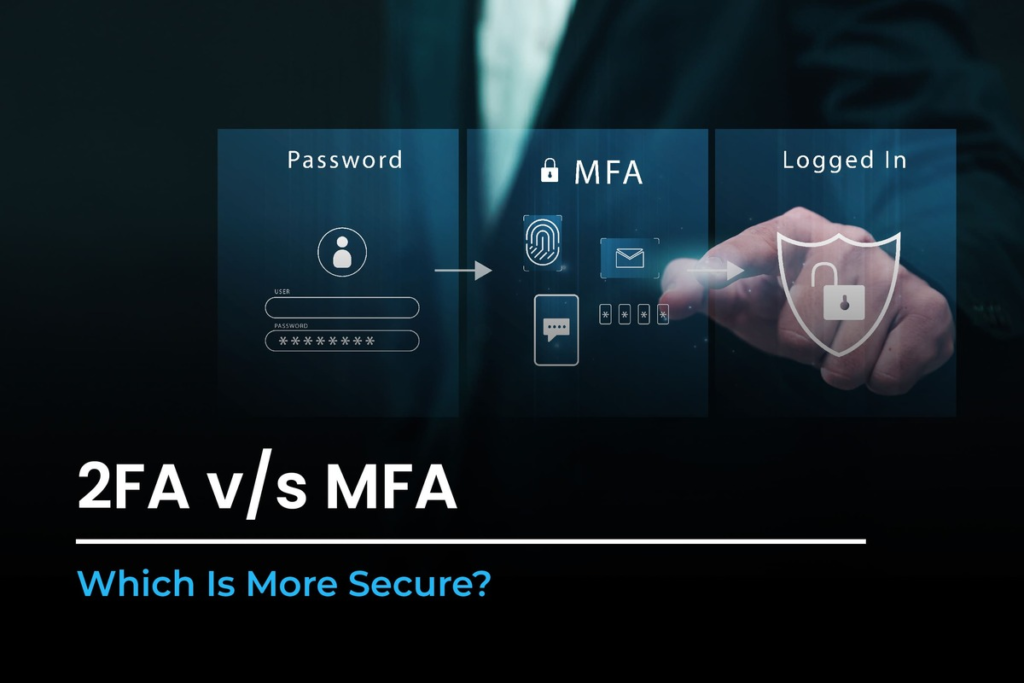
Not exactly.
Two-Factor Authentication (2FA) is a form of Multi-Factor Authentication (MFA) that requires two authentication elements.
Multi-Factor Authentication (MFA) is any authentication system that requires two or more verification elements.
For example:
2FA = Password + Finger print
MFA = Password + Auth App + Security Key
Every 2FA system is MFA, although not all MFA systems are confined to only two elements.
Conclusion
In 2026, online dangers are changing and passwords alone can’t keep your digital identity safe any longer. Multi-Factor Authentication (MFA) provides a key layer of security by utilising many verification methods to restrict access.
One of the simplest and most efficient ways to stop unauthorised access is to activate MFA when locking down your personal email, your online banking, social media accounts or your office applications.
Combine MFA with strong, unique passwords and excellent cybersecurity behaviours to dramatically reduce your risk of account compromise.
Frequently Asked Questions
1. What is Multi-Factor Authentication (MFA)?
Multi-factor authentication (MFA) is a security technique where a person must offer two or more authentication items to gain the right to access an account or device .
2. Is MFA better than just a password?
Yes, MFA provides an extra layer of security that makes it much harder for attackers to access your credit even if they know your password.
3. What is the most secure MFA?
Compared to SMS authentication, hardware protection keys and authentication packs are generally seen as more secure because they are much less vulnerable to phishing and SIM switching attacks.
4. Do I have to allow MFA on all my loans?
Yes. When available, enable MFA on major accounts, including email, banking, cloud storage, photo accounts, social media, and password managers.
5. Can multi-factor authentication be hacked?
No protection measure is ever perfect, but MFA, when effectively implemented, makes it extremely difficult for unauthorized clients to gain access. Attackers often want your password and another authentication thing, which makes a hit attack tons more difficult.
References
- RSA – What Is Multi-Factor Authentication (MFA)?
https://www.rsa.com/resources/blog/multi-factor-authentication/what-is-mfa/ - Microsoft Security – What Is Multifactor Authentication?
https://support.microsoft.com/en-us/security/what-is-multifactor-authentication - OWASP Foundation – Multifactor Authentication Cheat Sheet
https://cheatsheetseries.owasp.org/cheatsheets/Multifactor_Authentication_Cheat_Sheet.html - NIST – Digital Identity Guidelines (SP 800-63B)
https://pages.nist.gov/800-63-3/ - Google Security – Safer with Google: 2-Step Verification
https://safety.google/security/2-step-verification/
For more useful ideas on technology, cybersecurity and digital security, visit ExplainMeTech.com and check out our latest guides, tips and insights.