
Strong passwords are not optional anymore. In 2026. We have passwords for email, social media, banking, shopping, work accounts, cloud storage, streaming services, and dozens of other online platforms. You could find it hard to keep in mind a separate, strong password for every account. This is when a password manager can be of real use.
A password manager encrypts your login information and keeps it in a vault. They can generate unique passwords, autofill login information, track password security, and enable features like two-factor authentication and passkeys. The most recent 2026 reviews of password managers from PasswordManager.com and Zapier look at security, usability, device compatibility, password generation and autofill, breach alerts, and passkey support. Looking for the best password managers in 2026? Here are some of the top options and what features to look for when you choose one.
What Is A Password Manager?
A password manager is a security tool that stores and manages your passwords in an encrypted digital vault. Rather than remembering dozens or heaps of passwords, you generally just need to keep in mind a strong password or some other stable authentication to access your vault.
A desirable password manager can regularly generate long, random, unique passwords for new accounts. Additionally, it can automatically populate your saved information when you visit a website or use an app.
Many modern password managers additionally offer features such as password authentication, breach notifications, static notes, password sharing, two-way authentication guidelines, and secret key guidelines.
Why Do You Need A Password Manager For 2026?
Password reuse remains one of the biggest challenges for personal cyber security. If you reuse passwords across numerous sites and one of those sites experiences a data breach, attackers may attempt to exploit the compromised credentials on your other accounts.
A password manager can do that for you. It allows you to set up separate passwords for every account.
For example, instead of memorising passwords such as:
- Email password
- Shopping password
- Social media password
- Banking password
- Work account password
The password manager can generate and remember a unique password for each service.
It also helps to resist the desire to include easily guessed information like your name, birthday, pet name, phone number or favourite sports team. Today, the recommendation on password safety is to use long and unique passwords, avoid using sensitive information and use multi-factor authentication if you can.
Best Password Managers In 2026
No password manager works for everyone. The one that is best for you will depend on your budget, devices, security needs and the features you want.
1Password – Best for Most Users
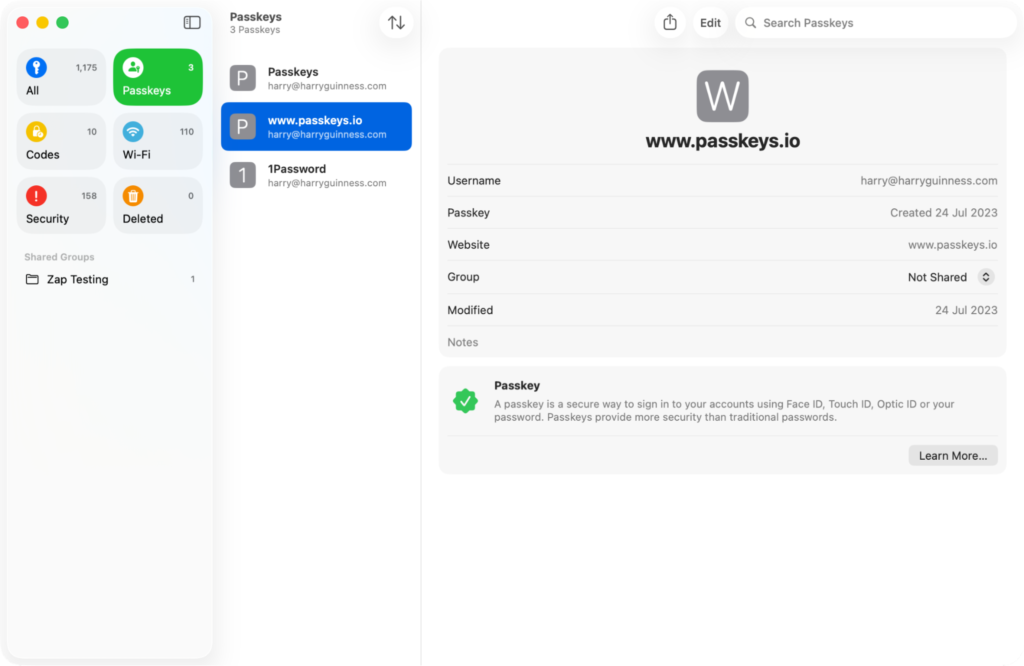
1Password is one of the top password managers out there and is featured by Zapier for 2026. It is designed with ease of use, excellent safety, and multi-platform compatibility in mind.
Its vault system may store passwords and other sensitive information and its security features can discover weak, copied or compromised passwords. It also accepts passkeys, and there are choices for individuals and families. It may be a good fit for those who want a slick password management experience and are OK with paying for a premium service.
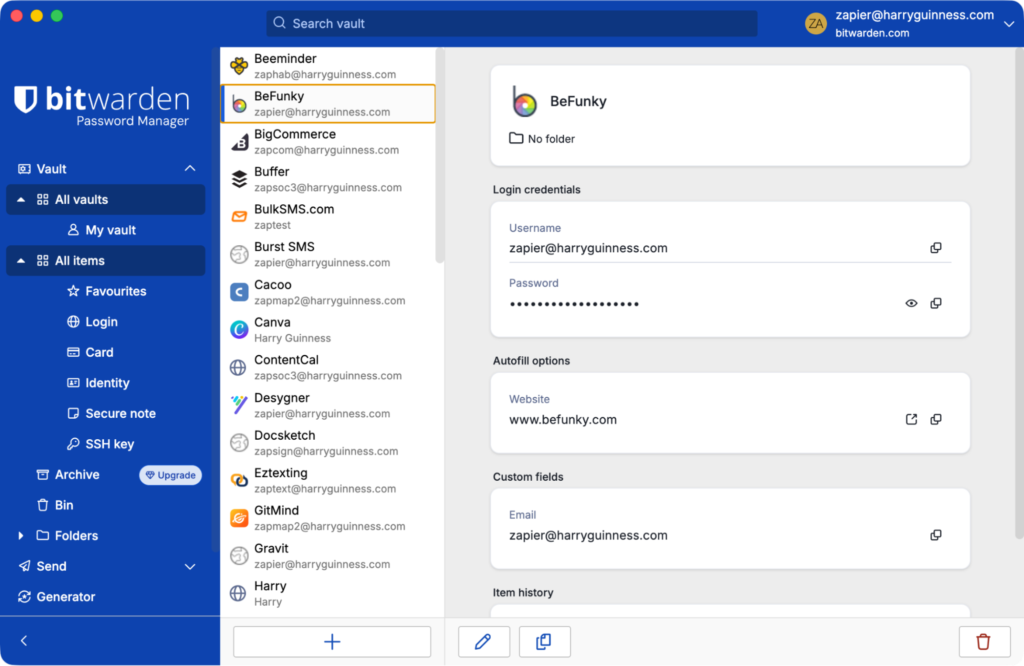
Bitwarden – Best Free Choice
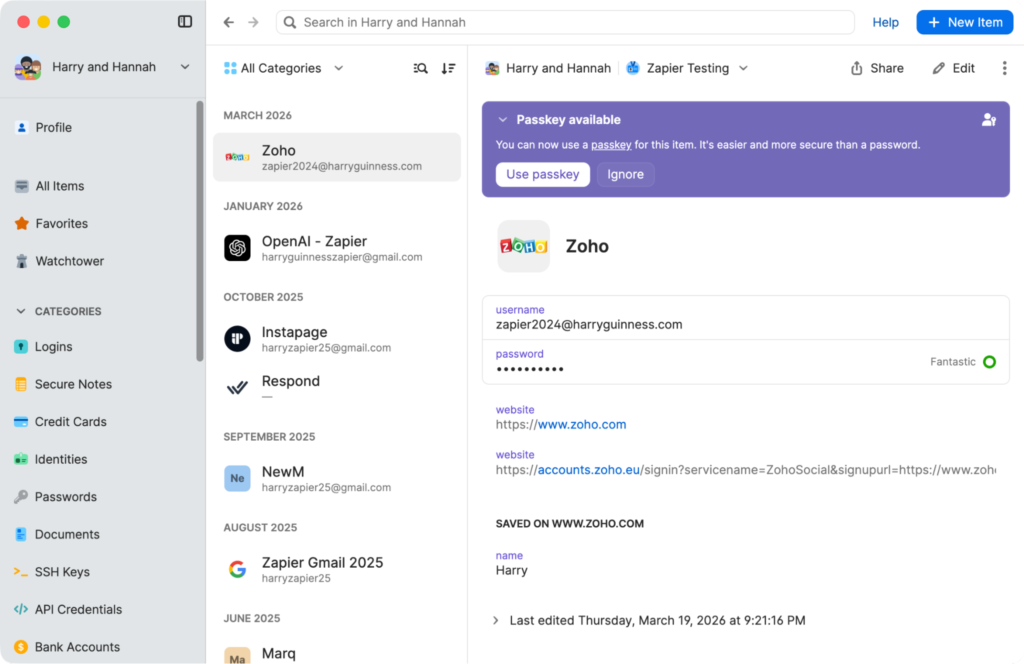
Another popular alternative is Bitwarden, especially if you want a strong free password manager. Zapier offers it as their recommendation for a free password manager and PasswordManager.com also recommends Bitwarden as a great free solution. It is able to generate and save passwords and is available on a number of devices. This also means users who want to improve their password habits without committing to a premium subscription right away can find it useful.
Proton Pass – Best for Privacy-Sensitive Users
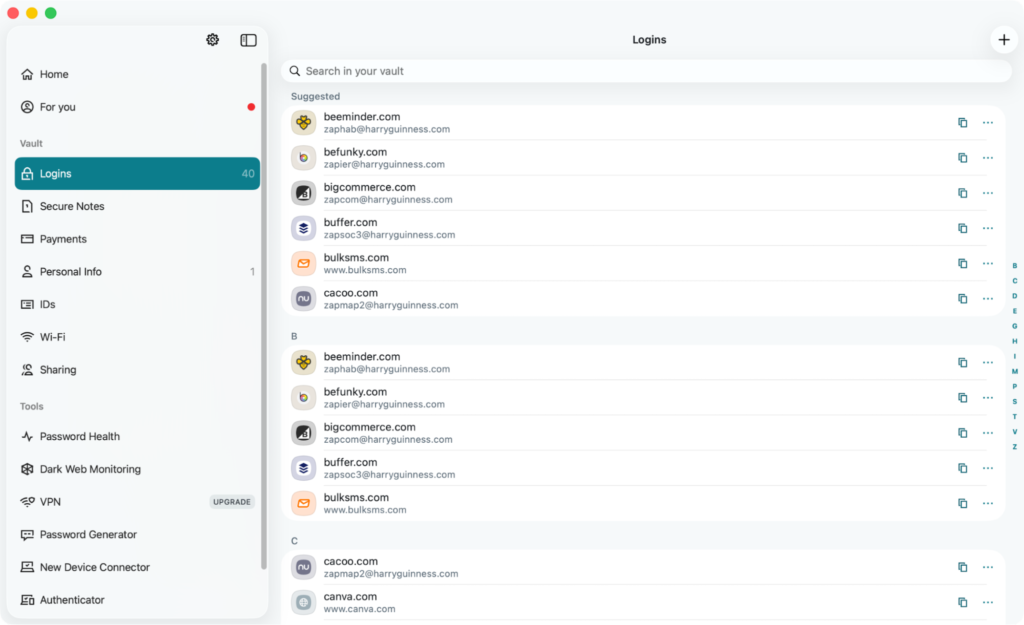
Proton Pass is built on password management, but it also integrates with Proton’s larger privacy ecosystem. Zapier notes this as an alternative for those searching for a beefier internet security solution. PasswordManager.com also notes that it is privacy-oriented, with features like open-source clients and email aliases. This might appeal to privacy-conscious users, as well as password-conscious users.
Dashlane – Best for Extra Security Features
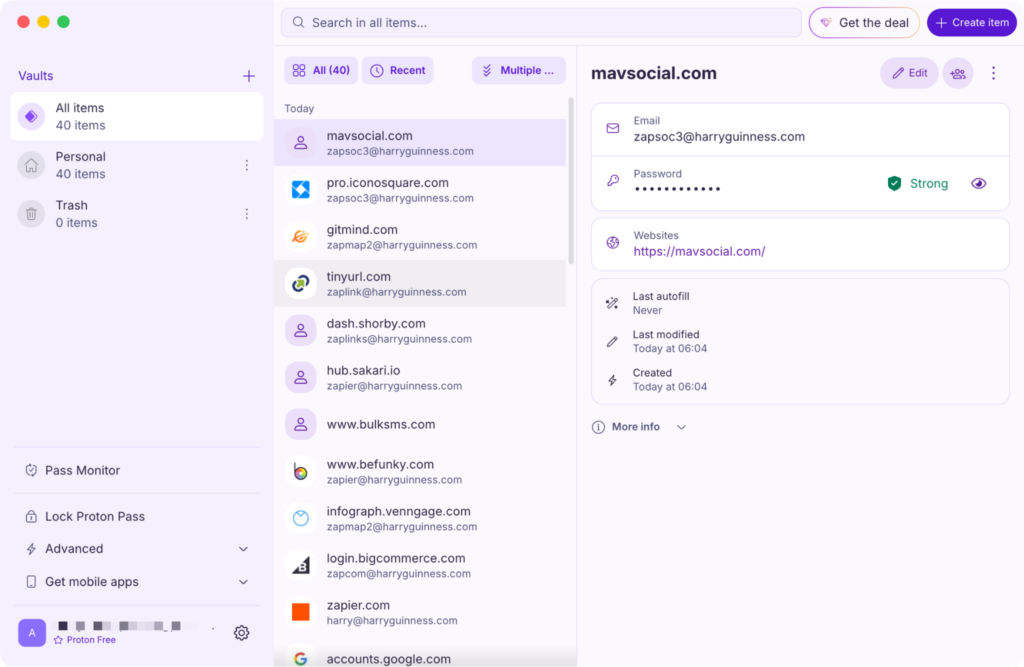
Another popular player in the password management game is Dashlane, which was also included in Zapier’s 2026 lineup. It has other security-related features beyond password management, therefore is good for those who want a little more than just simple credential storage.
Apple Passwords – Easy for Apple Users
Apple Passwords is a good option for those who primarily use Apple devices and want easy integration in the Apple ecosystem. It’s the preferred password manager for Apple users on Zapier. Having passwords built into the devices and services you already use makes it easier to stick with secure password practices.
What Features To Look For In A Password Manager?
Before you decide on a password manager, look past the price. Some of the key aspects include:
Strong encryption: Your password vault should have strong security features to protect the stored credentials.
Password generator: Built-in password generators should provide random, unique passwords, not support temporary mixtures.
Autofill: Autofill allows you to use specific passwords seamlessly while eliminating the need to set them up each time.
Multi-device support: A robust password manager should be available on the devices you use most often, including smartphones, computer systems, and browsers.
Breach Detection: Some services can tell you if the credentials they hold for you could be compromised in a statistical breach.
Password health checks: Security checks can let you stumble upon weak, reused, or compromised passwords.
Passkey Support: Passkeys have grown in popularity and can be used against standard passwords on websites and offers.
Two-factor authentication: MFA or 2FA is an extra layer of protection in case your password is ever hacked.
Realistic Example
Freelancer with Multiple Accounts
Imagine a freelancer with different accounts for Gmail, LinkedIn, a freelance marketplace, cloud storage, payment services, WordPress, and many client websites.
If the freelancer is using the same password for everything, a hack at one service might possibly open up all their accounts.
A password manager creates a unique, random password for every account you use. The manager saves the credentials and automatically fills them in on login.
The freelancer simply has to remember the master password and secure the password management account with an additional authentication method.
A Family Sharing Online Accounts
Think of a family that shares subscriptions for streaming, shopping, cloud storage and more.
Family members can utilise a password manager with secure sharing features instead of mailing passwords or writing them in a notebook.
Individual passwords can be personal, and chosen shared credentials can be shared with authorised family members. It makes account sharing more organised and lowers the chance of exposing passwords through normal messages.
Generate Strong Passwords Using Our Password Generator
Making a distinct password for every account can be a challenge, especially when websites have varied password requirements.
That’s why ExplainMeTech is developing a password-generating tool to help you create strong and unique passwords.
Instead of depending on guessable personal information, a password generator can help you create random combinations of letters, numbers, and symbols.
Our Password Generator: https://explainmetech.com/tools/password-generator/
Remember: Never reuse the same password on essential accounts, and never share your master password or generated passwords with anybody.
How To Use A Password Manager Safely?
A good password manager is half the battle. You have to use it correctly too.
Make a strong, unique master password.
Then, if possible, turn on multi-factor authentication on your password manager account. Then, begin replacing overused passwords with fresh, unique ones.
And check password-health reports and breach notifications often. If a provider notifies you of a password breach, change the password immediately.
And don’t forget to update your phone, PC, browser, and password manager app. The best security is when your software and your daily habits work hand in hand.
Final Thoughts
A perfect strategy to improve your online security is to use strong passwords but not manually remember dozens of static, unique passwords. The best way to do this is using password managers that automatically generate, store, and fill in credentials and other security measures.
In 2026, there are special events for special people: 1Password, Bitwarden, Protonpass, DashLane, and Apple Password. It is contingent upon what device you use, how much you’re willing to spend, how much privacy you want, and what security features you want. First and foremost, quit using weak passwords again and over again. Use the precise credentials for your claimed loans. Coupled with a good password manager, strong master password, MFA, and real security behaviour, it too can provide you with a full digital security setup.
Frequently Asked Questions
1. What’s the finest password manager in 2026?
There are also password management options, including Zapier’s 2026 choice of 1Password for most people, Bitwarden for free password management, Proton Pass for more internet protection, Dashlane for more security, and Apple Passwords for Apple users.
2. How secure are password managers?
While good password managers will provide encryption and various measures to protect the credentials they set up, customers should nonetheless choose a good carrier, set a strong master password, allow multi-element authentication, and ensure universal device protection.
3. Is it stable to have all your passwords in one password manager?
A password manager is an excellent tool for storing all your passwords in an encrypted virtual wheel; The key to accomplish maximum security is to set a strong eclipse password and additionally allow to have security features consisting of multi-factor authentication .
4. Can each account have a great password?
Yes, each account should have a unique password in an effort to maximize security, as a broken password can compromise many other poorly protected accounts, but Password Supervisor can help with this effort by generating random complex strings of characters to secure each account
5. Is a password manager more than storing passwords in a web browser?
It depends on your needs and the security elements included in each option. Dedicated password managers will occasionally provide a more expansive feature set with password-sound evaluations, static share break notifications, password keys, and various security options.
Reference Sources
OWASP – Authentication Cheat Sheet
Useful for password security, authentication, MFA, login protections, and account security.
OWASP Authentication Cheat Sheet
NIST – Digital Identity Guidelines (SP 800-63B)
A strong authoritative reference for password length, compromised passwords, authentication, and digital identity security.
NIST Digital Identity Guidelines – SP 800-63B
Google – Google Account Help: 2-Step Verification
Useful for supporting information about 2-Step Verification, passkeys, and protecting Google accounts.
Google Account Help – 2-Step Verification
Microsoft – Passwordless Authentication
Useful for discussing passwordless authentication, passkeys, and Microsoft’s approach to reducing dependence on passwords.
Microsoft Security – Passwordless Authentication
CISA – Secure Our World: Use Strong Passwords
A government cybersecurity source covering strong passwords, password managers, MFA, and safer online habits.
For more useful technology, cybersecurity and digital security information, please visit ExplainMeTech.com. See our latest guides, tips and insights.