
127.0.0.1 Explained: What Really Happens When You Connect to localhost? This question is critical for anyone learning networking, internet improvement, or cybersecurity. The concept of 127.0.0.1 is commonly related to localhost; however, it has a specific technical cause in pc networking.
When you input 127.0.0.1 right into a browser, your laptop does no longer sends the request throughout the net. Instead, the request is directed back to the same tool. This is why 127.0.0.1 is referred to as a loopback address.
Understanding 127.0.0.1, localhost, and loopback networking can assist builders in troubleshooting programs and help cybersecurity university college students recognize how community offerings talk.
What Is 127.0.0.1?

127.0.0.1 is an IPv4 loopback address. It belongs to the IPv4 loopback range, which is reserved for local communication within the neighborhood pc.
The most commonly used concept within this range is 127.0.0.1. When a software sends community visitors to this address, the working gadget routes the traffic again to the equal gadget.
In easy terms, 127.0.0.1 which means is “this pc” inside an IPv4 networking context.
For example, suppose you are growing an internet site for your pc. You may additionally run a neighborhood web server on port 8000. You can then get access to it through:
http://127.0.0.1:8080
The browser communicates with the nearby web server without contacting an outside server.
What Is Localhost?
localhost is a hostname that normally refers to the local computer. It is commonly mapped to the loopback address 127.0.0.1 for IPv4.
Therefore, these addresses often reach the same local machine:
http://127.0.0.1
http://localhost
However, 127.0.0.1 vs localhost is technically a comparison between an IP address and a hostname.
127.0.0.1 is an IP address, while localhost is a hostname. The hostname can be resolved to an appropriate loopback address by the operating system or name-resolution configuration.
What Happens When You Connect To 127.0.0.1?
First, your browser or software creates a TCP connection to the specified host and port. The operating system acknowledges 127.0.0.1 as a loopback destination.
Instead of sending the packet to a physical network interface, the working device handles the traffic internally. The data is introduced to a provider listening on the chosen port.
For instance:
127.0.0.1:80
An approach where a utility is trying to talk with a provider on port 80 of the equal pc.
If a web server is listening on that port, it can reply to the request. If nothing is listening, the relationship may also fail.
This explains how 127.0.0.1 works without requiring a web connection.
How Does 127.0.0.1 Work?
The loopback concept is implemented through the operating device’s networking stack. It lets in programs to talk with offerings walking at the same tool using everyday networking protocols.
The simple process looks like this:
- A software creates a network request.
- The destination is set to 127.0.0.1.
- The working gadget identifies the destination as a loopback address.
- The site visitor stays in the network.
- The working device can provide it to the utility listening on the requested port.
- The receiving application processes the request and sends a response.
This is the basic idea behind how localhost works on a computer.
Why Is 127.0.0.1 Called Localhost?
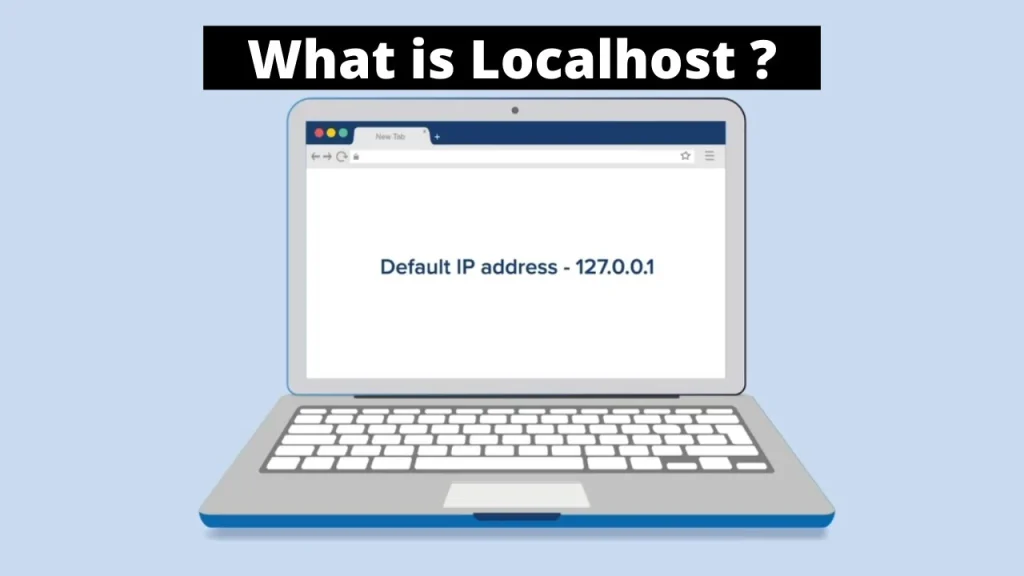
The term localhost refers back to the local host, meaning the laptop presently being used.
The hostname localhost is typically related to loopback addresses. For IPv4, this commonly corresponds to 127.0.0.1. IPv6 makes use of :1 as its loopback address.
This is why developers often use localhost whilst checking out programs domestically.
The essential distinction is that localhost is a name, even as 127.0.0.1 is a numeric IPv4 address.
What Is The Purpose Of 127.0.0.1?
The purpose of 127.0.0.1 is to offer a dependable way for software on a laptop to talk with itself through networking protocols.
Developers use it for checking out websites, APIs, databases, improvement servers, and different applications.
For instance, a developer can also run an software domestically before deploying it to a manufacturing server. The utility can be accessed through:
http://127.0.0.1:3000
This allows the developer to check capability without making the development service publicly available.
This is one reason why builders use 127.0.0.1 in the course of application improvement.
127.0.0.1 Vs Localhost
Although 127.0.0.1 and localhost are commonly used together, they are not technically identical concepts.
| Feature | 127.0.0.1 | Localhost |
| Type | IPv4 address | Hostname |
| Purpose | Loopback communication | Name for the local host |
| Common use | Local networking | Local development |
| IPv4 association | Yes | Usually 127.0.0.1 |
| IPv6 equivalent | N/A | Commonly resolves to::1 |
The localhost IP address can therefore depend on the networking environment and address family being used.
Is 127.0.0.1 Accessible From The Internet?
Normally, 127.0.0.1 is intended for local exchange with the host. It isn’t always a public IP address for reaching a pc from every other tool.
For example, if a server software listens most effective on 127.0.0.1, outside devices typically cannot at once connect with that service through the server’s network concept with.
This may be beneficial for local development and may lessen exposure of development services. However, localhost binding must now be treated as an entire protection mechanism.
Applications can nevertheless have vulnerabilities, and neighborhood customers or different software program on the identical device may be capable of having interaction with them.
Common Uses Of 127.0.0.1
There are several common uses for the localhost IP.
1. Web Development
Developers can host websites locally and test them before deployment.
2. API Testing
Local APIs can be tested using browsers, command-line tools, or API testing applications.
3. Software Development
Applications can communicate with locally running services.
4. Network Troubleshooting
The loopback interface can help determine whether the local networking stack is functioning properly.
5. Cybersecurity Testing
Security professionals may use local services and loopback connections in controlled testing environments.
What Does 127.0.0.1 Mean In Networking?
In networking, 127.0.0.1 represents the IPv4 loopback address most commonly used to identify the local machine.
It does not represent some other computer on a local network. It also does not represent your router, public IP address, or another network-related device.
Understanding this difference is beneficial whilst learning networking basics.
For example, your computer may also have a non-public network concept with 192.168.1.X, at the same time as 127.0.0.1 stays the community loopback concept with.
How To Access Localhost Using 127.0.0.1?
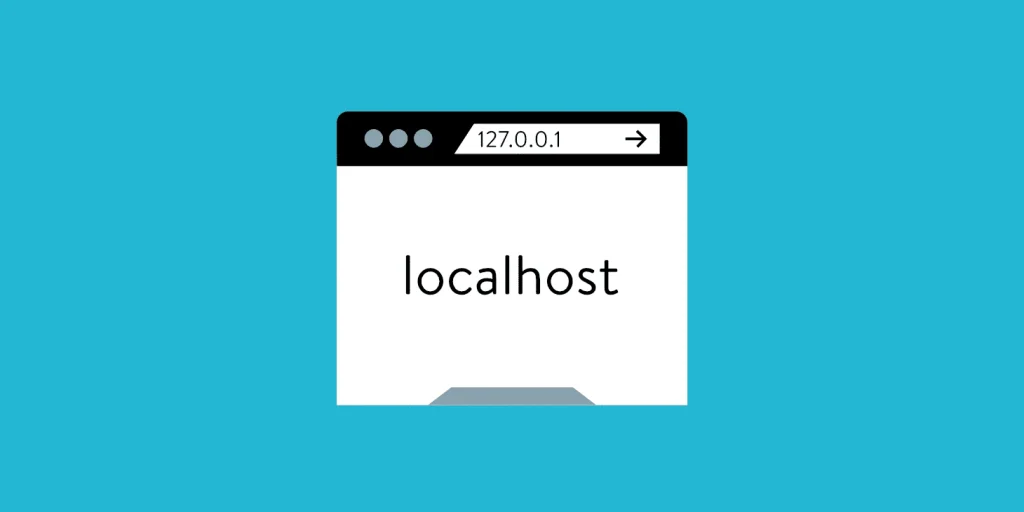
If an utility is strolling domestically, you could regularly access it via entering its address and port right into a browser.
For example:
http://127.0.0.1:8080
The port relies upon the software. Common development environments use ports which include 3000, 5000, 8000, or 8080.
If the browser can not join, take a look at whether the software is running and whether or not it’s listening on the anticipated port.
Why 127.0.0.1 Matters For Cybersecurity?
Understanding 127.0.0.1 is also important for cybersecurity.
Security tools and vulnerable applications may run locally during testing. A service bound to localhost may not be directly exposed to external networks, but local applications can still communicate with it.
Security researchers also need to understand loopback behavior when analyzing server configurations, access controls, and network requests.
A secure configuration should therefore consider which interfaces a service listens on and which users or applications can access it.
Conclusion
127.0.0.1 is an IPv4 loopback address that lets a pc to talk to itself through the networking stack. It is typically associated with localhost, the hostname used to refer to the local computer.
Knowing what is 127.0.0.1, what is localhost, and the way 127.0.0.1 works makes it simpler to recognize internet development, networking, and cybersecurity. Whether you’re testing software or mastering networking fundamentals, the loopback deal is a critical concept.
Frequently Asked Questions
1. What is 127.0.0.1?
127.0.0.1 is an IPv4 loopback concept. It refers back to the neighborhood computer and lets in packages to speak with services running at the equal tool. Traffic despatched to this address is handled locally in preference to being sent to every other laptop throughout a network.
2. Is 127.0.0.1 similar to localhost?
They commonly talk over with the identical local gadget for IPv4 networking, however they may be technically one-of-a-kind. 127.0.0.1 is an IPv4 concept, whilst localhost is a hostname that generally resolves to a loopback address.
3. What is the motive of 127.0.0.1?
The major purpose of 127.0.0.1 is local network communication. Developers can use it to test websites, APIs, packages, and other services without requiring a connection to an external server.
4. Why do developers use 127.0.0.1?
Developers use 127.0.0.1 to check packages on their own computer systems. A local improvement server can concentrate on a particular port, allowing developers to test functions before making the application to be had on a production server.
5. What happens while you hook up with 127.0.0.1?
When you hook up with 127.0.0.1, the running device acknowledges it as loopback traffic. The request stays on the neighborhood gadget and is brought to a provider listening on the requested port. If no provider is listening, the relationship usually fails.
Try Our Tools
Want to explore more technology and cybersecurity resources? Visit the ExplainMeTech Tools section to find useful online tools for everyday technical and security-related tasks. You can access the tools here: https://explainmetech.com/tools/.
References
- OWASP – Web application security and secure development resources: https://owasp.org/
- NIST – National Institute of Standards and Technology cybersecurity and networking resources: https://www.nist.gov/
- Microsoft Learn – Networking and Windows documentation: https://learn.microsoft.com/
- Google Security – Google security information and resources: https://security.google/
- IETF – Internet standards and networking specifications: https://www.ietf.org/