
If you are looking to make a career in the field of cybersecurity, you might think, “Does networking matter to become an ethical hacker?” The short answer: yes. Networking is one of the most fundamental technical underpinnings for aspiring ethical hackers. Networks are how computers, servers, applications, cloud platforms, cellphones, and IoT devices talk to each other; thus, understanding how they communicate makes it a lot easier to spot holes in security.
An ethical hacker is a person who is allowed to hack systems, networks, apps, and infrastructure to find out the weaknesses before malicious hackers take advantage of them. Ethical hackers need to have a working knowledge of IP addresses, ports, protocols, routing, DNS, firewalls, VPNs, network traffic, and other networking principles to be successful in performing these tests.
Why Is Networking Important For An Ethical Hacker?
Networking is crucial because many security vulnerabilities Many security vulnerabilities stem from the communication between devices and services, making networking crucial. to communication between devices and services. A networking-savvy ethical hacker can gain more insight into how the systems are communicating, where the traffic is flowing, which services are exposed, and where security controls may require further testing.
For example, picture a corporation with a web server connected to an internal database server. The architecture can be assessed by an ethical hacker to see if it is protected enough by analyzing the network segmentation, IP addressing, ports, routing, and firewall rules.
NIST addresses cybersecurity and network security in terms such as security testing, access control, vulnerability analysis, and networking services and protocols.
So networking is not just another ability. For many cybersecurity jobs, it’s part of the technological basis that other talents build on.
Understanding IP Addresses
One of the first networking principles that an ethical hacker should understand is IP addressing.
An IP address identifies a device or network interface so that systems can communicate with each other. The ethical hacker should comprehend the difference between IPv4 and IPv6, private and public addresses, subnetting, gateways, and fundamental network addressing.
You don’t need to be a network engineer, but you should know how to read and interpret an IP address.
For example, private address ranges are normally used within local networks, while public addresses can be used to communicate over the Internet.
Internet Protocol and the principles of IPv4 and IPv6 are key components of Microsoft’s networking fundamentals curriculum.
Learn TCP/IP
Another key area for the ethical hacker is TCP/IP.
TCP and IP do distinct things in networking. They are complementary. IP deals with addressing and routing. TCP is a dependable, connection-oriented protocol.
An ethical hacker should have knowledge of ideas like
- TCP and UDP
- Packets
- Ports
- Connections
- IP addresses
- Network interfaces
- Routing
- Client-server communication
This understanding enables an ethical hacker to comprehend what happens when a browser connects to a website or when one system talks to another.
You don’t have to learn all protocols at once. Start by understanding how data passes between systems.
Understand Ports And Protocols
Ports are very crucial in cybersecurity.
Services communicate across specified ports and protocols. Typical examples are HTTP, HTTPS, DNS, SSH, SMTP, and other network services.
An ethical hacker must understand the purpose of a specific service and the potential security consequences it may have. An ethical hacker must understand the purpose of a specific service and its potential security implications. and what security consequences it may have.
For example, exposing a superfluous service on a server could expand its attack surface. An ethical hacker can identify exposed services and assess their proper configuration during an authorized security evaluation.
This is one of the reasons why network discovery and service enumeration are common ideas in penetration testing. Penetration testing can involve evaluating systems from a remote location to discover and exploit vulnerabilities within an authorized assessment, according to OWASP.
Learn The OSI Model
The OSI model allows an ethical hacker to comprehend networking at different levels.
The classic seven layers are
- Physical
- Data Link
- Network
- Transport
- Session
- Presentation
- Application
You should not be trying to mechanically memorize the OSI model. Instead, find out what each layer symbolizes.
For example, IP is mainly a network layer protocol, TCP and UDP are transport layer protocols, and HTTP is an application layer protocol.
Microsoft’s networking course describes how OSI layers regulate the movement and consumption of network traffic.
An ethical hacker who is aware of these layers can easily diagnose and analyze security.
DNS Knowledge Is Essential
DNS, or the Domain Name System, translates human-friendly domain names into IP addresses.
DNS helps the system determine the location of a website when someone types its address into a browser.
An ethical hacker has to know:
- DNS records
- Domain names
- DNS resolution
- DNS servers
- Caching
- Basic DNS security concepts
DNS is of specific interest to security because attackers may attempt to manipulate or misuse name-resolution mechanisms. An ethical hacker who knows what typical DNS looks like can spot unusual activity in an authorized evaluation.
Learn Firewalls And Network Segmentation
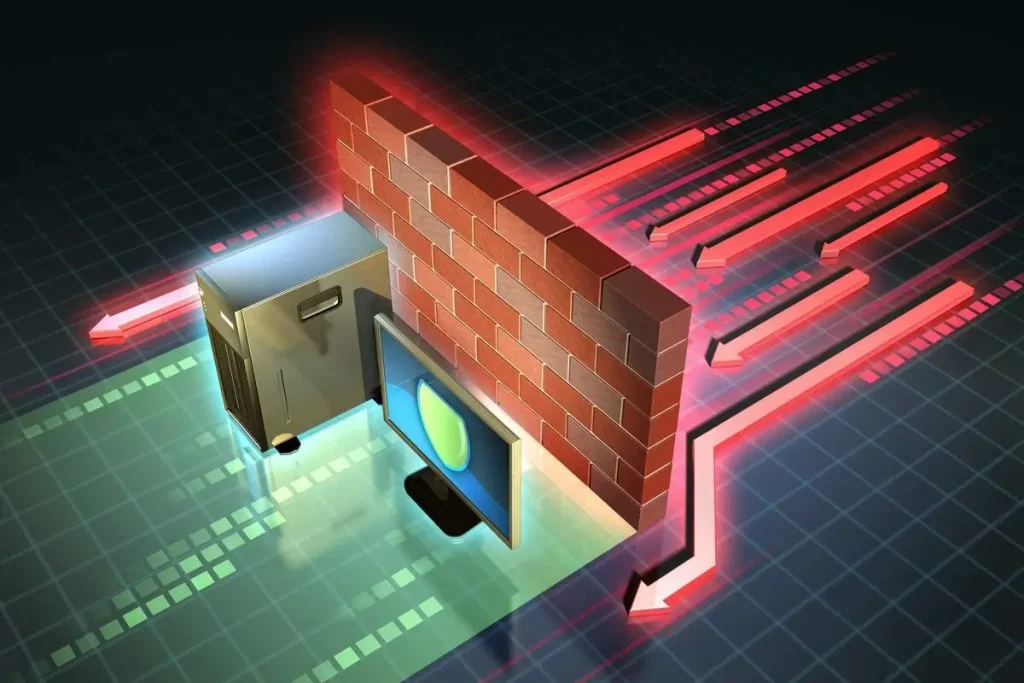
Firewalls filter network traffic based on defined security policies. Network segmentation separates infrastructure into discrete security zones.
An ethical hacker needs to understand why organizations use firewalls and segmentation and how those measures impact communication between systems.
The term “network security” refers to the collection of policies, practices, and tools that work together to help prevent and monitor unauthorized access, misuse, modification, or denial of the computer network and the resources it makes available. Examples include firewalls, intrusion detection and prevention systems, virtual private networks, endpoint protection, identity restrictions, and encryption.
This information is valuable for the ethical hacker to determine if the security controls are performing as they should.
Understand Network Traffic
An ethical hacker should know what network traffic looks like between communicating systems.
Packets carry information that can help network professionals comprehend communication between devices. An ethical hacker can use official security-testing tools to learn how to read packet captures to explore odd traffic and troubleshoot security problems.
Tools such as Wireshark might be helpful for learning about packet analysis in a controlled lab environment.
The purpose is more than just gathering packets. The idea is to learn what typical communication looks like and to identify possibly problematic trends.
Networking Helps You Understand Cybersecurity Tools
Once you understand networking, many of the cybersecurity technologies become easy to grasp.
For example, an ethical hacker might discover tools designed for:
- Network discovery
- Packet analysis
- Vulnerability assessment
- Web application testing
- Security monitoring
- Traffic inspection
- Configuration analysis
These tools can look like many complicated commands if you don’t know anything about networking.
An ethical hacker with networking skills is able to better grasp what the tools are truly measuring or testing.
That’s why it’s generally more beneficial to master the basics first, instead of trying to memorize sophisticated commands instantly.
Networking Is Important For Web Security As Well
Some newbies think networking is important only for network penetration testing. No, it isn’t.
Even if you are an ethical hacker who is focused on online application security, it is useful to know HTTP, HTTPS, DNS, TCP/IP, TLS, cookies, proxies, and client-server communication.
OWASP security guidance covers basic principles, including authentication, authorization, vulnerabilities, HTTP, and HTML. This guidance is a beneficial example of how networking and application security concepts interact.
It is easier for an ethical hacker to comprehend application security testing if they understand how a browser interfaces with a web server.
Networking Is Increasingly Important In Cloud Security
Modern infrastructure is more than just typical office networks.
Organizations are increasingly using cloud environments, virtual networks, containers, APIs, and distributed services. Google Cloud networking information includes topics such as VPC networks, IP addresses, DNS, firewall settings, and communication between the cloud and on-premises environments.
That means networking know-how remains important when infrastructure goes to the cloud.
Google also touts Zero Trust principles that state users, devices, and services shouldn’t be trusted merely because they are on a certain network.
As an ethical hacker, knowledge of these modern designs might aid you when analyzing cloud security policies and access vectors.
Real-World Examples
WannaCry and Network Propagation
The WannaCry ransomware attack is a good example of why understanding network communication is important when considering cybersecurity.
The infection propagated quickly across susceptible Windows PCs , highlighting the vital role of network-level security and prompt patching . As a cybersecurity specialist looking into such an event, you need to understand how machines talk to each other, how exposed services can be vulnerable, and how malicious behaviour can jump from one system to another.
The takeaway for an ethical hacker is that security testing should not be limited to testing the individual systems alone. Network design, segmentation, exposed services, patching, and restriction of access heavily influence the extent to which an attack can propagate.
Google’s BeyondCorp Approach
Another useful illustration of how networking and security have evolved is Google’s BeyondCorp.
Google’s Zero Trust model is all about authentication, authorisation, device context and continuous verification, rather than trusting people just because they’re inside a corporate network. Google says it’s taking this strategy in part because credentials can be stolen by bad actors, and confidence solely on the network is not enough.
This is a demonstration to an ethical hacker why knowing network boundaries is not enough anymore. Modern security evaluations must also include identities, devices, applications, cloud services and access policies.
What Networking Topics Should You Learn First?
If you want to become an ethical hacker, you don’t need to learn all the networking topics before you start working on cybersecurity.
A practical learning sequence is:
Beginner Level
Start with:
- LAN and WAN
- IP addresses
- MAC addresses
- Routers and switches
- Network interfaces
- TCP/IP
- TCP vs UDP
- Common ports
- DNS
- DHCP
- HTTP and HTTPS
- Intermediate Level
Then learn:
- Subnetting
- Routing
- NAT
- VPNs
- Firewalls
- Proxies
- Network segmentation
- VLANs
- Wireless security
- Packet analysis
- Advanced Level
Once you are comfortable, explore:
- Cloud networking
- IPv6
- Network monitoring
- IDS/IPS
- Zero Trust
- Secure network architecture
- Identity-aware access
- Advanced traffic analysis
This gives an ethical hacker a great footing without the need to learn network-engineering for years.
Can You Become An Ethical Hacker Without Networking?

You can start learning cybersecurity without deep knowledge of networking, technically. But knowing your way around the networking side of the house makes you a far better ethical hacker.
For instance, you might be able to follow a tutorial that illustrates a security tool, but without understanding IP addresses, ports, protocols, routing, and traffic, you may not comprehend why the strategy works.
Networking helps you work through problems too.
A security-testing tool can’t connect to a lab system; an ethical hacker who knows networking can check if the issue is addressing, routing, firewall rules, ports, DNS, or the service itself.
So networking is a core ability, not an optional bonus.
Best Way To Learn Networking For Ethical Hacking
The best method is to combine theory with practical, legal hands-on experience.
Begin with the foundations of networking. Then construct a safe cybersecurity lab using systems you control or have specific permission to test on.
Learn to recognise IP addresses and network paths. Look at packets. Set up simple firewall rules. Watch how common protocols work.
You can also employ purposely susceptible training environments and cyber security learning platforms.
Most importantly, understand what constitutes authorised security testing and what constitutes unauthorised access. Ethical hackers should only hack systems they have been given authorisation to test.
Final Thoughts
So, is networking important to be an ethical hacker? Of course.
That’s the basis for comprehending how PCs, applications, servers, cloud environments and security devices communicate with each other. An ethical hacker with knowledge of networking will be more effective at the job of using security tools, investigating vulnerabilities, analysing traffic, understanding attack surfaces, and communicating technical results.
If you are really looking to become an ethical hacker then you should start with networking basics, create a legal practice environment and then progressively move on to penetration testing, vulnerability assessment, online security, cloud security and security operations.
Frequently Asked Questions
1. Is networking mandatory to become an ethical hacker?
Networking is not technically mandatory to start learning cybersecurity, but it is overwhelmingly recommended. A strong network infrastructure allows an ethical hacker to understand IP addresses, ports, protocols, site visitors, routing, and network security controls.
2. What networking skills should an ethical hacker learn?
The ethical hacker will examine the basics of TCP/IP, IPv4 and IPv6, subnets, DNS, DHCP, HTTP/HTTPS, TCP and UDP, ports, routing, NAT, VPN, firewalls, VLANs, community distribution, and packet analysis.
3. Should I learn networking before Kali Linux?
Yes, mastering basic networking before relying heavily on Kali Linux can make picking up cybersecurity tools much easier. An ethical hacker must understand what the machine is doing rather than actually copying the commands.
4. Is it possible to be an ethical hacker without significant networking knowledge?
Yes. You don’t have to know advanced network engineering at the start. However, as they move into penetration testing and advanced security assessments, an ethical hacker should also establish excellent networking foundations.
5. How much time does it take to master networking for ethical hacking?
People are not the same. With a few months of steady study and hands-on practice, a beginner can acquire effective networking principles. To be a good ethical hacker, you need to practise a lot in networking, operating systems, programming, web security, cloud security, and other areas.
Try Our Tools
Want to learn useful technology and cyber security ideas by practicing? Visit our resources at ExplainMeTech for practical utilities to help your everyday tech and cybersecurity study. Visit the ExplainMeTech Tools page to explore helpful tools that simplify everyday technological chores.
Reference Links
- OWASP – Web Security Testing Guide
OWASP Web Security Testing Guide - NIST – Cybersecurity and Privacy
NIST Cybersecurity and Privacy - Microsoft Learn – Fundamentals of Computer Networking
Microsoft Networking Fundamentals - Microsoft – Networking Fundamentals
Microsoft Networking Fundamentals Course - Microsoft Azure – Networking Fundamentals
Azure Networking Fundamentals
For more helpful technology, cybersecurity, and digital-security tips, visit ExplainMeTech.com and explore our latest guides, tools, and insights.