AI now features in chatbots, coding assistants, customer service platforms, search tools, corporate apps, and autonomous AI agents. But as these systems get more powerful, attackers are seeking methods to influence them, too. What is Prompt Injection How Do Hackers Attack Artificial Intelligence Systems is a critical question for anyone utilising or developing AI-powered systems. Prompt Injection is simply when specifically prepared instructions cause an AI model to act in a way different than the way its authors intended. The impact can range from generating deceptive responses to exposing sensitive data and performing unauthorised acts.
What Is Prompt Injection?
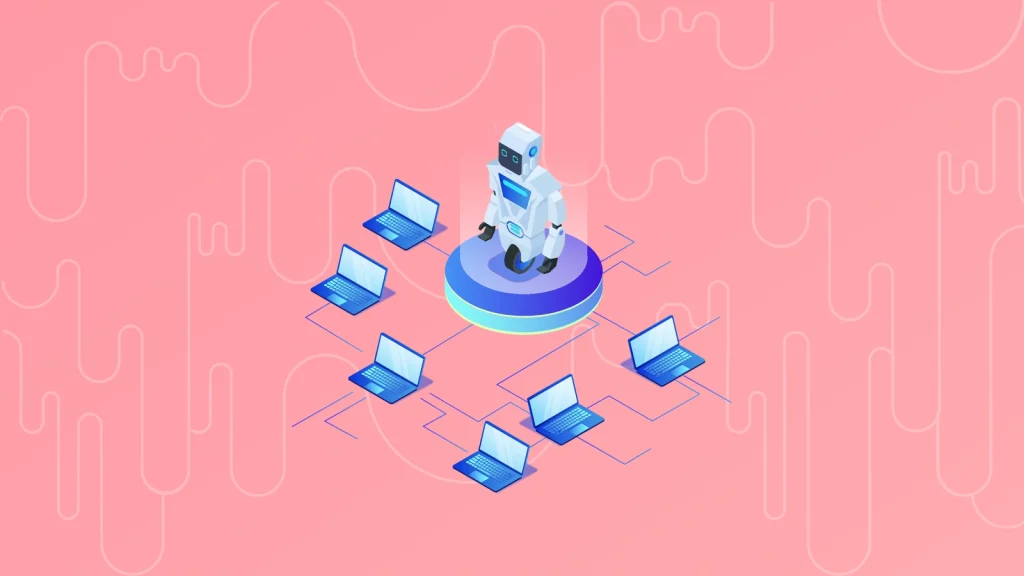
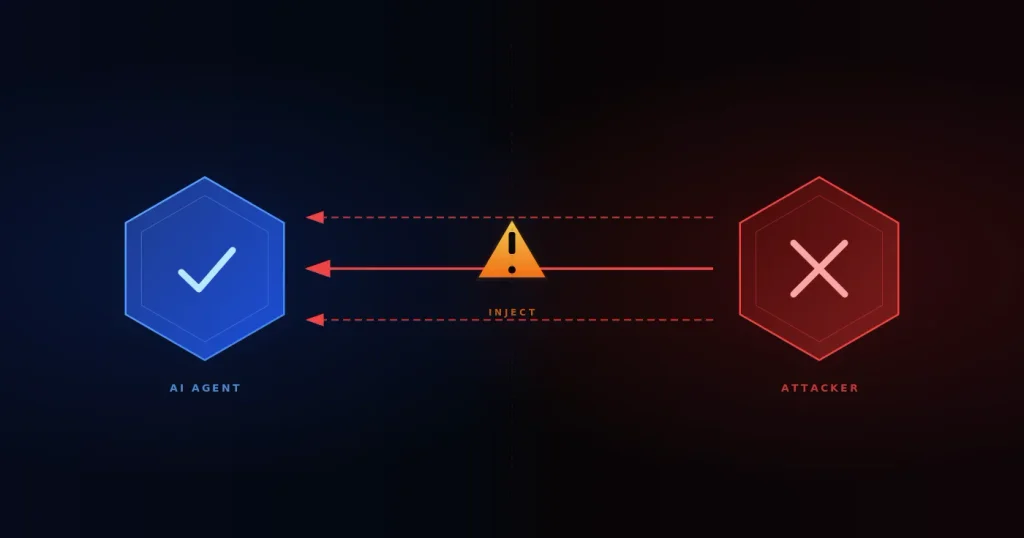
Prompt Injection is a security vulnerability in AI where an attacker sends instructions or content to influence the behaviour of an LLM. The attacker does not simply ask the model a standard query, but instead tries to shift its priorities, bypass limitations, reveal information or influence actions.
OWASP has named this vulnerability LLM01:2025 Prompt Injection and it is the number one risk in OWASP’s current list of LLM risks. OWASP states that even if harmful instructions are not visible to the human user, they may nevertheless alter the model’s behaviour.
The problem is that fundamentally, AI models are built to work using plain language instructions and information. If an application does not distinctly segregate trusted instructions from untrusted content, an attacker might try to persuade the model to accept malicious input as an instruction.
Prompt Injection does not always rely on typical programming languages such as SQL injection or command injection. The attacker can utilise plain English, well written text, documents, websites, emails or even pictures.
How Does Prompt Injection Work?
An average AI application could have few layers:
- System instructions
- Developer instructions
- User input
- Retrieved documents
- External websites or emails
- Tools and APIs
- AI-generated output
The risk goes up when the model may interact with untrusted information and strong external tools.
For instance, an AI assistant that summarises documents in a corporate system. A malicious document may contain instructions for the AI, not the human reader. If the assistant is processing the paper, it may consider those instructions as relevant context.
This is known as indirect Prompt Injection.
With a direct attack the attacker connects with the AI themself. The malicious instructions are hidden in information which the AI then processes, an indirect attack. OWASP lists webpages, publications, and other external sources as viable delivery methods.
Direct Vs. Indirect Prompt Injection
1. Direct Prompt Injection
Direct Prompt Injection is when an attacker inserts harmful instructions directly into an AI program.
For example, an attacker might try to trick a chatbot into ignoring its intended function, such as to divulge data it is not supposed to share.
The objective could be:
- Bypass safety restrictions
- Extract hidden instructions
- Manipulate the response
- Obtain confidential information
- Trigger unauthorized functions
- Influence business decisions
Direct assaults are straightforward to understand, because the malicious input comes from the user directly.
2. Indirect Prompt Injection
It is a little harder to identify Indirect Prompt Injection.
Consider an AI assistant that can read email messages and generate summaries. An attacker sends an email containing instructions tailored to the AI helper. Once the assistant processes the email, the harmful instructions become part of its context.
The user reads an email that appears normal, but the AI sees the email along with instructions that are hidden inside it.
OWASP defines indirect attacks as cases where an LLM interprets external input that contains instructions to change its behaviour.
Why Is Prompt Injection Dangerous?
The greatest danger is not just that an AI will deliver the wrong response. When the AI has access to sensitive information, applications, APIs or tools, the risk is substantially higher.
Successful Prompt Injection attack may result in:
Sensitive Data Exposure
An attacker might try to get an AI system to divulge sensitive information from its context, related databases, documents or interactions.
System Prompt Leakage
Attackers may try to find out internal instructions, configuration details or application logic.
Unauthorized Actions
If an AI agent has access to email, calendars, databases, cloud services, or can execute commands, it might potentially be tricked into doing something it was not designed to do.
Incorrect Decisions
Business process AI tools were vulnerable to manipulation, resulting in wrong suggestions or classifications.
Security Control Bypass
Attackers may try to bypass content restrictions, assumptions made in authentication, or guardrails at the application level.
According to OWASP , impacts can be sensitive-information disclosure, unauthorised function access, arbitrary commands in connected systems, and important choices modification.
How Hackers Attack AI Systems?

Attackers can attack different sections of the workflow of an AI application.
1. Manipulating User Input
The simplest way is to supply carefully crafted instructions meant to affect the behaviour of the model.
2. Poisoning External Content
Attackers may conceal malicious instructions in a website, document, email, repository file, or other resource that the AI system is meant to read.
3. Targeting RAG Applications
Retrieval-Augmented Generation (RAG) programs retrieve information from external sources before producing an answer. They can be attack paths, if malicious instructions are present in these resources.
RAG and fine-tuning can improve AI programs, but they can’t entirely eradicate injection vulnerabilities, according to OWASP.
4. Attack of AI Agent
AI agents introduce more danger because they can take actions with tools. Researchers at Microsoft Security showed how flaws in an AI-agent framework might provide a prompt-driven path to remote code execution at the host level, demonstrating the need of tool permissions and isolation.
5. Multimodal inputs
Artificial intelligence systems nowadays can read language, look at photographs and analyse data. This means that malicious instructions might be embedded in information that the model would understand but a person might not.
OWASP points out that multimodal systems have extra attack surfaces as malicious instructions can be concealed in visuals and other modalities.
Two Real-World Examples
Bing Chat and the ‘Sydney’ incident
One of the first cases to receive widespread attention was Microsoft’s Bing Chat, in which researchers showed how to manipulate the chatbot’s behaviour and extract some of its hidden discussion rules. In earlier material, OWASP cites the Bing Chat “Sydney” event as an example of successful circumvention of protections.
One key takeaway from the incident: including security instructions in a system prompt does not ensure that an AI model would consistently adhere to them when faced with hostile input.
Microsoft Semantic Kernel AI-Agent Research
A more recent example shows just why security for AI agents is so critical. In 2026, Microsoft Security researchers identified vulnerabilities in Semantic Kernel that might allow malicious prompts to result in host-level remote code execution on some vulnerable setups. Microsoft said a prompt may force an agent to execute a program since the AI was linked to tools that could interact with the host environment.
This highlights the distinction between influencing the response of a chatbot and manipulating an AI system with real world skills. The more AI agent has privileges the more devastating effects can be.
How To Prevent Prompt Injection?
There is no one security measure that will give comprehensive protection. OWASP advises a defense-in-depth approach since these vulnerabilities take advantage of the way AI applications interpret commands and data.
1. Separate Instructions From Untrusted Data
Applications must explicitly separate the system commands from the user-provided content, which is obtained externally.
2. Use Least Privilege
An AI model should only be given permissions it needs for its work. Don’t give an AI agent unfettered access to databases, files, APIs or operating-system operations.
3. Validate Inputs and Outputs
Security controls can monitor both the input prompts and the generated responses for suspicious content, sensitive information, or unexpected behaviour.
4. Add Human Approval
High-risk actions should require human validation. Money transfer, deleting a record, modifying permissions. Commands and sending sensitive email should not be only an AI choice.
5. Isolate AI Tools
AI agents should be kept in bounded environments wherever they can be. Sandboxing and network segmentation can help lessen the effect of a compromised workflow.
6. Monitor and Log Activity
Organisations should log critical AI interactions, tool calls, authentication events and anomalous behaviour. Microsoft suggests operational detection and telemetry to help you identify prompt abuse and investigate occurrences.
7. Perform Adversarial Testing
Developers should proactively test AI programs under malicious and unexpected input conditions prior to release and after substantial revisions.
Google, in its AI security work, has also highlighted adversarial testing and automated review for indirect injection concerns.
8. Protect Sensitive Information
Sensitive information should _not_ be fed into the context of an AI model automatically. Google Cloud suggests securing data at the application and data levels and outlines methods for checking prompts and responses for sensitive information.
Prompt Injection And AI Security In 2026
Prompt Injection is becoming more and more an application-security risk as artificial intelligence systems grow from simple chatbots to agents that can interact with apps and services.
A text only AI helper has a limited blast radius. It has a much bigger one: an AI agent that can read client records, execute code, send messages or alter cloud resources.
Google’s most recent AI security guidance emphasises defence in depth across application, data and infrastructure layers.
This means that organisations need to pair AI-specific measures with conventional cybersecurity techniques such as authentication, authorisation, network segmentation, monitoring, secure coding, vulnerability management and data protection.
The simple point is that an AI model should never be expected to identify trusted instructions from harmful instructions consistently on its own. The architecture around it should be designed to ensure security.
How Businesses Can Reduce The Risk?
Businesses implementing AI should develop an AI security checklist on:
- AI models and providers
- System and developer instructions
- User inputs
- RAG data sources
- Plugins and APIs
- Agent permissions
- Sensitive information
- Logging and monitoring
- Human approval processes
- Incident-response procedures
- Security testing
OWASP suggests limiting model behaviour, validating expected outputs, filtering inputs and outputs, applying the principle of least privilege, isolating external content, requiring human clearance for high-risk procedures, and adversarial testing.
Similarly, Google proposes that AI security should be seen as a mix of software security, data security, governance and other safeguards, and not solely the model itself.
Conclusion
With the increasing adoption of AI chatbots, RAG apps and AI agents, Prompt Injection is emerging as a critical cybersecurity challenge. Attackers may attempt to manipulate artificial intelligence (AI) systems by direct prompts or malicious instructions concealed in documents, websites, emails, photos, and other external content. And the risks multiply when artificial intelligence systems are granted access to sensitive data or strong capabilities.
More than just depending on an AI model to follow its instructions, defending against Prompt Injection is. Organisations need to implement strict control of access, least privilege permissions, input and output validation, sandboxing, monitoring, human approval for high-risk operations, and regular security testing. When AI-specific safeguards are combined with regular cybersecurity procedures, organisations may greatly minimise the possibility of attacks and develop safer, more trustworthy artificial intelligence systems.
Frequently Asked Questions
1. What is Prompt Injection explained in simple terms?
Prompt Injection is an attack where an attacker sends instructions or harmful content to trick an AI model into taking some action other than what the model was originally supposed to do.
3. Is Prompt Injection the same as jailbreaking?
They are highly related but different. Generally, Jailbreaking tries to escape the safety mechanisms of an AI model . Prompt Injection is a more generic term for manipulating model behaviour using well designed inputs or external information. Jailbreaking is considered a type of prompt injection by OWASP.
3. Does Prompt Injection collect passwords?
This can lead to sensitive information leakage, especially if an AI application has access to confidential data and poor controls over access. But an assault does not necessarily mean passwords or other secrets will be revealed.
4. Are RAG applications subject to effects?
Yes. Documents, websites and other information collected by RAG systems can be vulnerable to Prompt Injection. Retrieved content should therefore be viewed as untrusted input and not implicitly trusted instructions.
5. What can firms do to protect standard artificial intelligence systems?
Companies should practise defence in depth: segregate trusted instructions from untrusted data, apply least privilege, validate inputs and outputs, isolate tools, monitor activities, demand human consent for high-risk processes, and frequently undertake adversarial security testing.
Try Our Tools
If you want practical tools to help you with cybersecurity, technology, privacy and digital safety, see the ExplainMeTech Tools page. Discover online tools that assist you with the tech and security tasks you do every day. Try our tools: ExplainMeTech Tools
Reference Links
- OWASP – LLM01:2025 Prompt Injection
OWASP Prompt Injection Guide - OWASP – LLM Prompt Injection Prevention Cheat Sheet
OWASP Prevention Cheat Sheet - NIST – AI Security / Adversarial Machine Learning Resources
NIST AI Security Resources - Microsoft – AI Security: Input, Context and Retrieval Hygiene
Microsoft AI Security Guidance - Google Cloud – AI Security Guidance
Google Cloud AI Security - MITRE ATLAS – Adversarial Threat Landscape for Artificial-Intelligence Systems
MITRE ATLAS
For more helpful technology, cybersecurity, and digital-security tips, visit ExplainMeTech.com and explore our latest guides, tools, and insights.